
Right, let's cut through the jargon. Human capital management (HCM) isn't just a fancy term for HR. It's a fundamental shift in thinking. Instead of seeing your team as a cost on a spreadsheet, HCM treats them as your most critical asset—an investment that drives real growth. It’s about moving beyond the day-to-day admin and proactively building a team that can win.
What Is Human Capital Management Anyway?
Think of your startup as a high-performance race car. Traditional HR is the team making sure the car is registered, insured, and legally compliant. Essential stuff, but it doesn't make the car go faster.

Human Capital Management is the pit crew and the race engineers. They're the ones tuning the engine, perfecting the aerodynamics, and training the driver to shave seconds off the lap time. HCM is about actively engineering your team for the win.
For years, HR has been largely reactive. It dealt with payroll, compliance, and workplace issues as they came up. HCM, on the other hand, is all about looking ahead. It asks the big questions: Do we have the skills we’ll need in 18 months? Who are our future leaders, and how are we developing them? What actually motivates our top performers to stick around?
In the tech world, this strategic mindset is everything. Your competitive edge isn't just your product; it's the combined brainpower of the people building it. Letting that "human capital" go untapped is like owning a supercar and never taking it out of first gear.
The Shift From Administration To Strategy
The big idea behind HCM is simple: investing in your people's skills, growth, and well-being delivers a direct, measurable return on your investment. This isn't just about offering a few perks. It's about everything from who you hire to how you help them build a career with you.
To see this shift clearly, let's compare the old way with the new.
Traditional HR vs Strategic Human Capital Management
| Aspect | Traditional HR Focus (Administrative) | Strategic HCM Focus (Value-Driven) |
|---|---|---|
| Function | Reactive, focused on compliance and policy enforcement. | Proactive, focused on achieving business goals. |
| People View | Employees are an expense to be managed. | People are an asset to be invested in and developed. |
| Planning | Short-term, addressing immediate needs like filling open roles. | Long-term, forecasting future talent needs and skills gaps. |
| Activities | Siloed tasks: payroll, benefits admin, issue resolution. | Integrated strategy: talent, performance, and learning are linked. |
| Data Use | Reporting on historical data (e.g., turnover rates). | Using predictive analytics to inform strategic decisions. |
| Success Metric | Efficiency and cost reduction. | Business impact, innovation, and employee lifetime value. |
As you can see, the difference is huge. It’s a move from being a necessary cost centre to a core driver of business value.
This integrated approach means that all your "people" functions should talk to each other. Recruitment, performance reviews, and training shouldn't exist in their own little bubbles. They need to be connected.
- Performance data should tell you which training programmes your team actually needs.
- Your recruitment strategy should specifically target the skills your current team is missing.
- Pay and rewards should be directly tied to the behaviours that push the company forward.
When these pieces work together, every decision you make about your people directly supports your biggest business goals. But none of this works without a solid foundation. And that foundation is great staff communication. Without clear, honest dialogue, even the most brilliant strategies fall apart. It’s the oil that keeps the entire people engine running smoothly.
The Core Pillars of a Modern HCM Strategy
Forget the old-school HR checklist. Building a solid human capital management strategy is more like building a high-performance engine. Every part has to work together, creating a system that gives your startup momentum. For a fast-moving tech company, this engine needs to be agile, smart, and ruthlessly focused on growth.

There are five core pillars that form the foundation of this growth engine. When they’re all firing in sync, they create a cycle that pulls in, develops, and keeps the exact talent you need to win.
Pillar 1: Talent Acquisition
This isn’t just about filling empty seats. It's about hunting for the minds that will build your future, not just patch the holes you have today. It means looking past a CV to see a candidate’s potential to grow and evolve right alongside the company.
In the hyper-competitive tech world, this means you have to:
- Build a magnetic employer brand: This is your reputation on the street. It’s what developers, designers, and data scientists say about you when you're not in the room.
- Run a data-driven hiring machine: Use real numbers to figure out what works. Which job boards actually send you superstars? How long does it take to get a great hire from first chat to signed contract?
- Obsess over the candidate experience: Every single person who applies—whether you hire them or not—should walk away impressed. A great experience can turn a rejected candidate into a future customer or your biggest fan.
Pillar 2: Onboarding and Engagement
Getting the contract signed is the starting line, not the finish. The first 90 days are absolutely critical. A well-thought-out onboarding process can turn a new hire’s excitement into genuine commitment, making sure they get the vision and their part in it.
A messy, confusing start, on the other hand, is a fast track to them leaving. This pillar is all about making people feel welcome, prepared, and connected from day one. It's the difference between someone just showing up for a pay cheque and someone joining a mission.
Engagement is the emotional buy-in an employee has to the company and its mission. It’s not just a fuzzy feeling; highly engaged teams drive 21% greater profitability. How people feel about their work has a direct, measurable impact on your bottom line.
You build this buy-in with clear communication, setting expectations upfront, and plugging new people into the company culture and their teams. It's an ongoing effort, not a one-week checklist.
Pillar 3: Performance Enablement
The traditional annual review is dead. Or at least, it should be in any startup that wants to move fast. Performance enablement throws out that old-fashioned model for a system of continuous feedback and coaching. It’s about helping people improve, not just judging them.
This modern approach is all about:
- Regular, informal check-ins: Managers and their teams should be talking constantly about progress, roadblocks, and goals.
- Peer-to-peer feedback: You need to build a culture where everyone feels comfortable giving and getting constructive input. It helps the whole team get better, faster.
- Clear goal alignment: Everyone needs to see a straight line from their daily work to the company's big-picture strategy. They need to know why their work matters.
This is about empowering your people to do their best work and clearing any hurdles out of their way.
Pillar 4: Learning and Development
In tech, skills have a very short shelf life. What's revolutionary today is standard practice tomorrow. A smart learning and development (L&D) programme is your best defence against becoming obsolete. It’s about deliberately upskilling your team for the challenges you haven’t even hit yet.
This isn't about sending people on random courses. For a startup, effective L&D is:
- Personalised: Give people learning paths that line up with their own career goals and what the business needs from them.
- Part of the job: Weave learning into the daily workflow. Think mentorships, on-the-job training for new projects, and easy access to online resources.
- Forward-looking: Figure out the skills your company will desperately need in the next 12-24 months and start building them now.
Pillar 5: Strategic Compensation and Rewards
At the end of the day, how you pay and reward your team sends the loudest message about what you truly value. Strategic compensation is about more than just a salary; it's the entire package you put together to drive the right behaviours and keep your most important people from walking out the door.
Of course, this includes base pay, but it also means thinking about:
- Equity and share options: Giving your team a real stake in the company’s success is one of the most powerful motivators you have.
- Performance-based bonuses: Directly tie rewards to hitting critical business goals.
- Benefits that actually matter: Offer perks that genuinely make your team’s lives better, from truly flexible working to top-notch mental health support.
When you lock these five pillars together, you get a powerful, cohesive human capital strategy. Great talent acquisition feeds into a great onboarding experience, which drives engagement and performance. That, in turn, shows you where you need to invest in learning, all reinforced by rewards that make people feel valued. It’s a continuous loop that will power your company’s growth.
Why HCM Is Your Secret Weapon for Funding and Growth
Let's cut right to the chase. Investors don't just back a clever idea or a slick pitch deck. They back the team that can actually pull it off. This is where a smart human capital management strategy shifts from a "nice-to-have" HR function to your most powerful tool for raising capital and sparking real growth.
For founders sweating it out in the early stages and the VCs looking for the next big thing, a solid HCM plan is a huge tell. It signals a startup's health, resilience, and potential to scale. It shows you get that your most valuable asset isn’t your code; it’s the brilliant people writing it.
Connecting People Strategy to the Bottom Line
A well-oiled people strategy isn't about fluffy culture perks; it's about building a high-performance engine that churns out real business results. The kind of results that investors pore over in your data room.
When you start managing your team through a strategic HCM lens, you’re directly dialling up the metrics that matter:
- Product Velocity: A fired-up, highly skilled engineering team ships better products, faster. When you keep your top talent, you spend less time onboarding new folks and more time actually building.
- Customer Retention: Happy, empowered employees deliver amazing customer service. It’s a straight line from employee satisfaction to customer satisfaction, which means lower churn—a metric every investor obsesses over.
- Innovation: When people feel safe to experiment and even fail, they take the creative risks needed to stay ahead of the pack. That's how breakthroughs happen.
I’ve seen too many promising startups with brilliant ideas hit a wall simply because they couldn't keep their best people. High employee turnover isn't just a morale killer; it's a hole in your pocket, pouring cash down the drain with every key employee who walks out the door.
Speaking the Language of Investors
During due diligence, an investor's main job is to poke holes in your plan and de-risk their investment. They're hunting for red flags, and a chaotic, non-existent approach to your people is one of the biggest ones you can wave.
On the flip side, a founder who can clearly lay out their HCM strategy is sending a powerful signal. It tells an investor you’re already thinking about:
- Scalability: You have a plan for finding, hiring, and integrating the next 10, 50, and 100 employees without the wheels coming off.
- Risk Management: You know who your top performers are and have a plan to keep them, reducing the massive risk of your lead engineer quitting right before a product launch.
- Capital Efficiency: You get that a bad hire is a costly disaster. A thoughtful approach to recruiting and onboarding shows you'll be a responsible steward of their money.
Investors are fundamentally pattern-matchers. A founder who can clearly explain how their people strategy will help them hit their milestones is demonstrating a level of operational maturity that sets them apart from the competition. It proves you're building a real business, not just a product.
HCM and Your Startup's Valuation
At the end of the day, your people strategy directly influences what your company is worth. A team of A-players who are in it for the long haul massively increases both the perceived and the actual value of your startup. It builds a defensive moat that competitors can't just code their way across.
Why? Because the strength of your team underpins every single financial projection in your pitch deck. A strong HCM foundation gives investors confidence that you can actually execute the ambitious vision you're selling. If you want to dig deeper into how operational strengths like this affect your company's price tag, you can learn more about the nuts and bolts of business valuation. Understanding this link is crucial for telling a convincing story.
Think of it this way: you could have two startups with identical products and market opportunities. The one with a clear, strategic plan for its people will almost always command a higher valuation. It’s seen as a safer bet with a much higher chance of success. Putting your people first isn't just good karma; it's brilliant business strategy.
Navigating the Competitive Irish Talent Market
Let's bring these big ideas down to earth and look at them through the lens of a specific, white-hot market: Ireland's tech scene. Building a team here isn't just about finding skilled people; it’s about convincing them to join your mission when every other high-growth company is knocking on their door. This is where a smart human capital strategy stops being a "nice-to-have" and becomes your biggest competitive advantage.
The Irish market is buzzing, no doubt. But that energy creates a high-pressure environment for founders. You're not just competing with other local startups. You're going head-to-head with global tech giants who have incredibly deep pockets, all chasing the same elite developers, data scientists, and commercial talent.
In a fight like that, trying to win by simply offering the biggest salary is a race most early-stage companies can't afford to run. And honestly, it's not the race you want to be in. This is where the core ideas of HCM really start to pay off.
Standing Out When Everyone Wants the Same Talent
So, if you can't always write the biggest pay cheque, how do you land the A-players? Simple. You compete on everything else. Your culture, the growth opportunities you provide, and the mission you’re on—these are your secret weapons.
This means your approach to managing your people needs to be intentional and, above all, genuine.
- Culture as a Magnet: Pinpoint exactly what makes your startup a fantastic place to work. Is it the freedom you give your engineers? The direct line of sight they have to customer impact? Whatever it is, make it real and shout about it from the rooftops during your hiring process.
- Career Development as a Promise: The best people don't just want a job; they want a journey. You need to show them a clear path for where they can go inside your company. Investing in their skills and promoting from within is one of the most powerful retention tools you have.
- Benefits That Actually Matter: Think beyond the standard perks. With the cost of living soaring in cities like Dublin, benefits that improve real-life balance—like genuine flexible working, solid mental health support, and generous parental leave—can easily trump a small bump in salary.
Your employer brand is what people say about your company after an interview, even the ones who didn't get the offer. In a tight-knit market like Ireland, a reputation as a great place to build a career is worth its weight in gold.
Addressing the Skills Shortage Head-On
The whole situation is made even trickier by some serious skills gaps. Finding and keeping talent is the number one headache for Irish businesses right now. A jaw-dropping 90% of them are reporting skills shortages, with IT skills being a specific pain point for 34% of companies. It's not just about technical chops, either— 36% pointed to a lack of leadership and influencing skills. This fierce competition has made it harder to keep your best people, with 68% of businesses saying retention has become more difficult. The full CIPD report on HR practices in Ireland dives deeper into these numbers.
This reality check means a proactive HCM strategy isn't optional; it's essential for survival. You have to focus just as much on developing the talent you've already got through smart upskilling and mentorship as you do on bringing new people in.
Ultimately, winning in the Irish market demands a people-first mindset. For more on this, have a look at our guide on 3 strategies for attracting top talent to your business. By putting these HCM principles into practice, you build a resilient, magnetic company that can thrive even when the war for talent is at its fiercest.
Choosing Your High-Performance HCM Tech Stack
A brilliant human capital management strategy is only as good as the tools you use to bring it to life. Without the right tech, even the best plans get lost in a sea of spreadsheets and manual admin. Picking your HCM tech stack isn't just about comparing features on a website; it's about finding a system that will be a true partner in your growth.
For a fast-moving startup, the wrong tech is a boat anchor. It creates friction, frustrates your team, and buries the very insights you need to make smart decisions. The right tech, on the other hand, becomes the central nervous system for your people operations. It automates the mundane stuff, freeing you up to focus on the strategic work that actually moves the needle.
Beyond the Feature List: What Startups Really Need
Let's be clear: a startup of 30 people and a corporation with 10,000 employees have wildly different needs. A system built for the corporate giant will crush a small team under the weight of its own complexity. When you’re choosing your first HCM platform, ignore the enterprise-level bells and whistles and focus on three things that truly matter.
- Seamless Integrations: Your HCM system can't live on an island. It has to play nicely with the tools your team already relies on every day—think Slack, Google Workspace, or Jira. This creates a single, smooth experience and stops your people from having to bounce between a dozen different apps just to get basic things done.
- Scalability: The platform that works for your first 20 hires must be able to scale with you to 100 and beyond. Look for modular solutions that let you add new capabilities—like performance management or learning modules—as you grow, without having to rip everything out and start from scratch.
- An Exceptional User Experience (UX): If your team hates using the software, they just won't. A clean, intuitive interface is non-negotiable. You want a platform that empowers employees to manage their own information and lets managers access team data without needing a week-long training course.
Making Data-Driven People Decisions
Ultimately, the real magic of a great HCM tech stack is the data it gives you. It turns guesswork into strategy by providing a clear, real-time picture of your organisation's health. You can spot engagement trends before they become retention problems, figure out what makes your top performers tick, and make informed calls on compensation and promotions.
This is where you can start leveraging the power of AI and data analytics for business growth to turn your people data into a massive competitive advantage.
The race to adopt HR technology is heating up, especially in Ireland's fierce talent market. The global HR tech space is expected to explode from $40.45 billion in 2024 to $81.84 billion by 2032, fuelled by automation and AI. Here in Ireland, companies are already using HR analytics (39%) and focused upskilling programmes (28%) to solve their biggest people challenges. Discover more insights about these HR statistics on hibob.com.
As you weigh your options, it helps to get a clear picture of the different systems out there. For example, a great first step is understanding HRMS systems and how they compare to broader HCM platforms. Choosing wisely means building a tech foundation that doesn't just support your growth, but actively accelerates it.
Building Your HCM Roadmap and Measuring Success
An idea without a plan is just a wish, right? The same goes for human capital management. To turn your people-first philosophy into an engine for growth, you need a clear, stage-by-stage roadmap that grows with your startup.
This isn't about buying and installing a massive, complicated system from day one. It's about being smart and intentional. You start with the fundamentals and then add more sophisticated layers as your team gets bigger and your business matures. The goal is to build a framework that actually supports your people and clearly demonstrates its value to the board and investors along the way.
You can see how HCM itself has grown up over the years. It started as basic admin and has become a core part of strategic planning, now even tapping into AI for smarter insights.
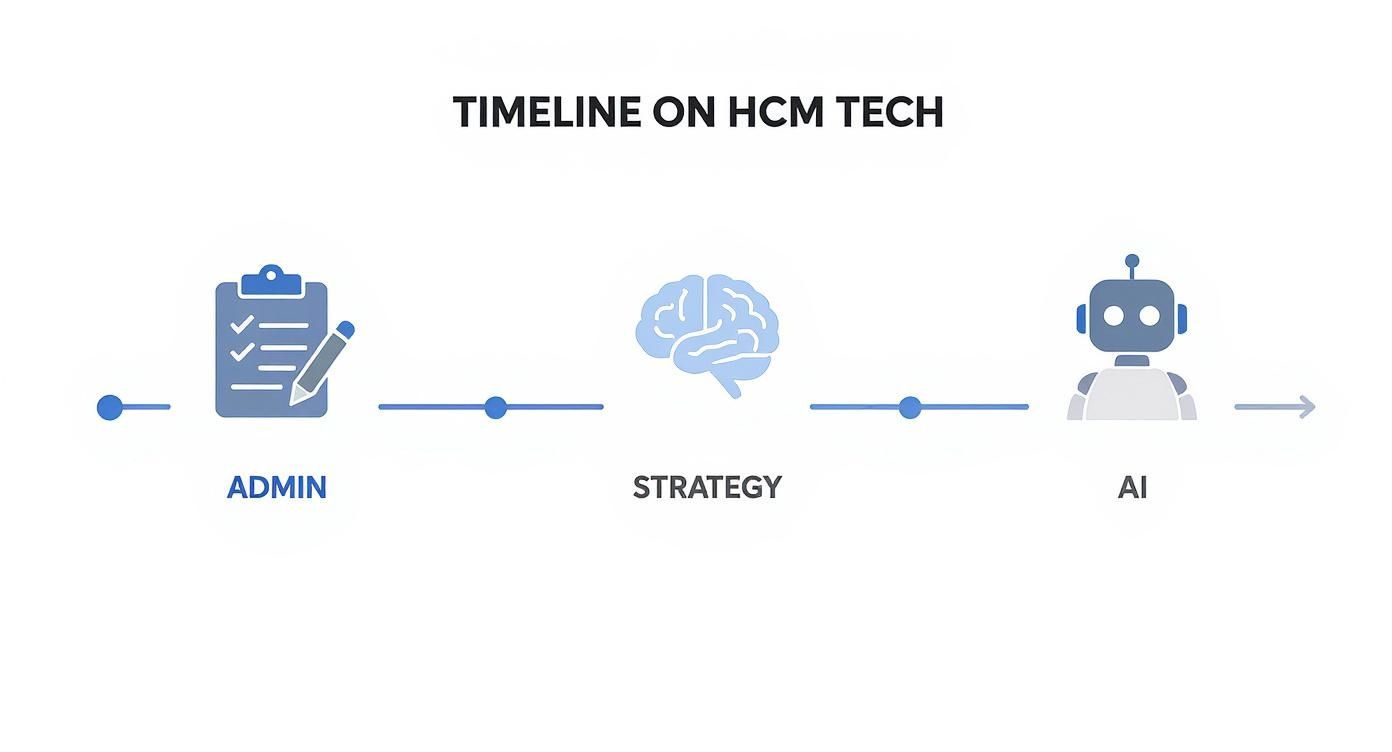
As the timeline shows, modern HCM isn't just for keeping records anymore; it's about using technology to make sharp, forward-looking decisions about your talent.
To make this practical, here’s a roadmap showing where to focus your HCM efforts as your company grows, complete with the key numbers you should be watching.
HCM Priorities and KPIs by Startup Stage
| Growth Stage | Top HCM Priority | Key KPIs to Track |
|---|---|---|
| Seed & Pre-Series A | Nailing the basics: culture, compliance, and a scrappy but effective hiring process. | • Time to Hire • Cost per Hire • Voluntary Turnover Rate |
| Series A | Formalising core processes and getting a single source of truth for people data. | • New Hire Performance (90-day) • Employee Engagement Scores • Offer Acceptance Rate |
| Series B & Beyond | Strategic workforce planning and proving the direct link between people investment and business results. | • Revenue per Employee • Internal Promotion Rate • Diversity & Inclusion Metrics |
Let's dig a little deeper into what this looks like on the ground.
From Seed Stage to Series A
When you're just starting out (Seed stage), your HCM priorities are all about survival and setting the right tone. You don’t need pricey software, but you absolutely need discipline.
The main goals are to lock in your core values, sketch out a hiring process that works (even if it's informal), and get your basic compliance sorted. It's all about building good habits from the very beginning.
But once you’re heading towards that Series A and your team pushes past the 15-20 person mark, the game completely changes. Your focus has to shift to creating systems that can actually scale.
Scaling Beyond Series B
With serious funding in the bank and a mandate for rapid growth, your HCM strategy needs to look further ahead. It stops being about just managing the team you have today and becomes about strategically planning for the team you’ll need 18-24 months from now.
This is the point where you have to connect the dots between your people data and business outcomes. You need to build a compelling story for your board that shows how investing in your people is directly driving revenue, innovation, and market share.
Proving the ROI of your people strategy is how you keep your board and investors on side. It means showing them how a lower turnover rate among your top engineers saves the company X amount in recruitment costs, or how higher engagement scores in your sales team correlate with a Y% increase in closed deals.
This kind of strategic planning is tough, especially in a shaky market. A recent study found that across Europe, a shockingly low 12% of HR leaders plan their workforce needs three or more years out. This short-term thinking often leads to bad hires, with recruitment success rates hovering at just 46% and 18% of new people leaving during their probation period. These stats from McKinsey's 2025 HR Monitor reveal a massive gap between what companies want to do and what they're actually doing.
By tracking the right numbers at the right time, you build a powerful narrative that proves your human capital isn’t just an expense—it’s your most valuable asset.
Frequently Asked Questions
Putting a solid human capital strategy into practice isn't just theory; it throws up some very real questions for founders and startup leaders. To help you cut through the noise, we've tackled some of the most common hurdles with straightforward, practical answers.
When Should an Early-Stage Startup Really Start Thinking About Human Capital Management?
Honestly? From day one. No, you don't need a massive, complex system when it's just you and a co-founder in a garage. But you do need to think about the core principles.
Things like defining the kind of culture you want to build, creating a reasonably consistent way to interview people, and sketching out how your first few hires might grow with the company. These aren't HR tasks; they're foundational business decisions.
Once you’re heading towards a Series A and the team size creeps past 15-20 people, that's your cue to get more formal. It’s usually when you bring in your first dedicated People Ops person and start looking at some basic HR tech to get organised.
What Is the Actual Difference Between an HCM System and a Basic HRIS?
Great question. Think of it like this: an HRIS is a simple digital filing cabinet, while an HCM is the entire integrated office suite.
A basic Human Resources Information System (HRIS) is purely administrative. It’s a system of record, a place to store employee data, run payroll, and manage benefits. It's essential, but it's fundamentally about compliance and record-keeping.
An HCM suite is a whole different beast. It’s strategic. It does everything an HRIS does, but it also bolts on integrated tools for the entire employee journey—recruiting and onboarding, performance reviews, training and development, and sophisticated analytics. For a startup that's scaling fast, an HCM helps you connect the dots and manage your people, not just their paperwork.
How Can We Actually Measure the ROI of Investing in HCM?
This is the question your board and investors will ask, and you need a solid answer. Measuring the return on your HCM investment means connecting your people initiatives directly to business results. It’s less fluffy than it sounds.
You can track concrete metrics that tell a powerful story:
- Recruitment Efficiency: Are you spending less to hire top talent? Is your time-to-fill for critical roles getting shorter? That's a direct cost saving and a speed advantage.
- Employee Retention: Look at your turnover rate, especially for your high-performers. Every top engineer or salesperson you keep is thousands of pounds in replacement costs saved.
- Productivity: This one hits the bottom line. Watch your revenue-per-employee. If it’s climbing as you invest in your people, you’re doing something right.
- Engagement: Don't dismiss those engagement survey scores. Higher engagement is consistently linked to lower absenteeism and better overall output.
Tracking these numbers gives you the hard data to prove that spending money on your people is one of the smartest financial decisions you can make. It transforms the conversation from a cost centre to a growth driver.
Discover more from Scott Dylan
Subscribe to get the latest posts sent to your email.