

If you've ever typed "Web Summit HQ" into a search bar, you were probably picturing a sleek, glass-fronted corporate building somewhere in Lisbon. But here’s the thing: it’s not really a physical office you can just drop by.
Instead, Web Summit HQ has become the unofficial, insider term for the massive, week-long tech conference that takes over Lisbon, Portugal, every year.
So, What Is Web Summit HQ Then?
Let's clear this up right away. Whilst the company behind the event definitely has physical offices, when people in the tech world talk about "Web Summit HQ," they're talking about the event itself. It's the temporary, pulsating heart of the global tech scene.
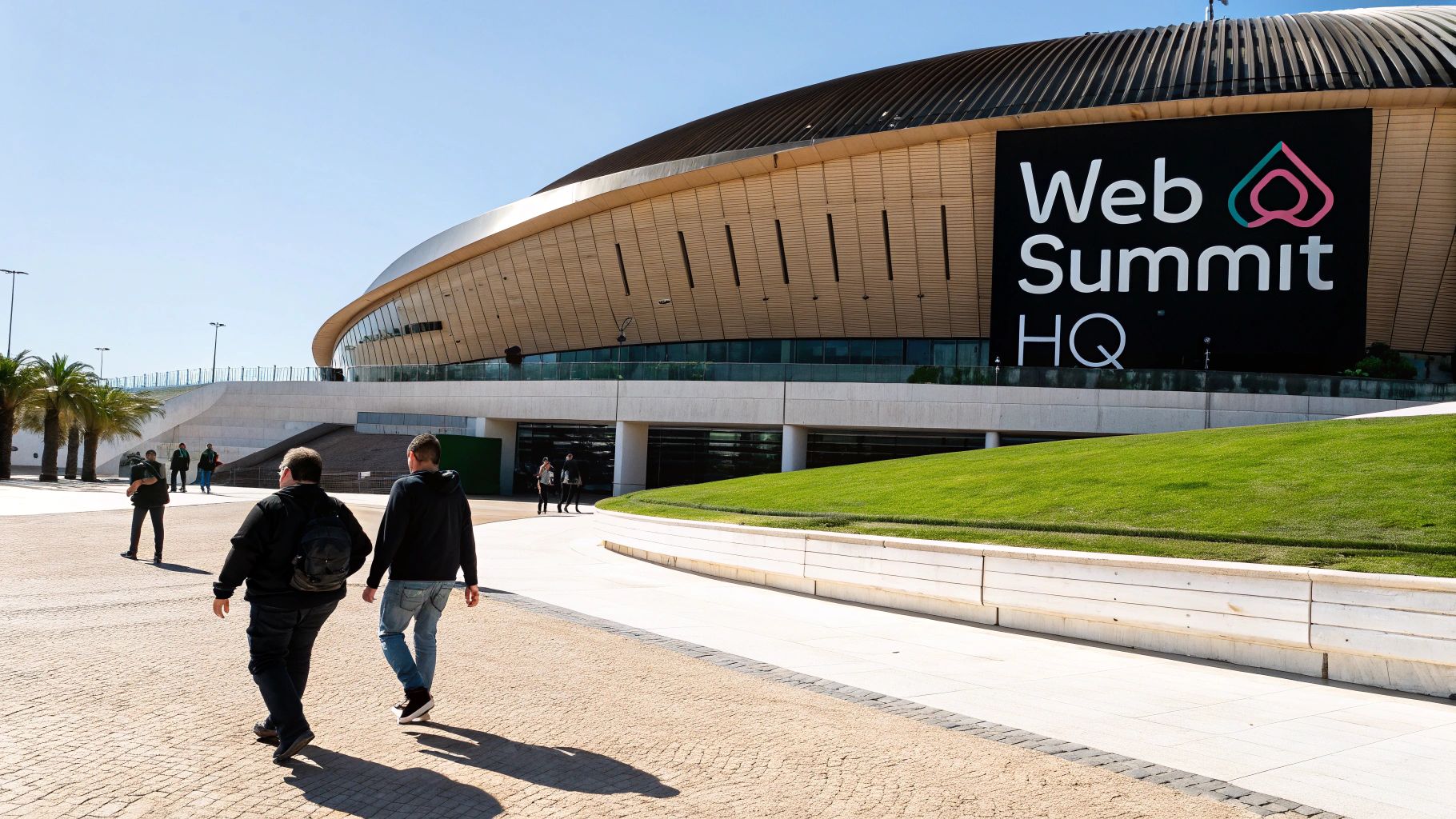
Think of it less as a postcode and more as the industry's annual command centre. For one week every November, Lisbon's Altice Arena and the surrounding FIL exhibition grounds transform into a sprawling campus buzzing with innovation, networking, and high-stakes deal-making. It’s a genuine pilgrimage for anyone serious about technology.
Getting this distinction is key. You're not looking for a building; you're gearing up for an immersive experience that pulls together tens of thousands of the sharpest minds in tech.
To put it in perspective, here's a quick rundown.
Web Summit HQ at a Glance
This table breaks down the essentials of what "Web Summit HQ" really means in practice.
| Aspect | Details |
|---|---|
| What It Is | The annual Web Summit technology conference. |
| Location | Altice Arena & FIL, Lisbon, Portugal. |
| When It Happens | Typically the first or second week of November. |
| Core Purpose | A central meeting point for founders, investors, tech leaders, and media. |
| Key Activities | Networking, pitching, keynotes, workshops, and deal-making. |
Essentially, it's the place to be if you're in the tech game.
From Humble Dublin Beginnings to a Lisbon Powerhouse
The event didn't just appear in Portugal out of nowhere. Web Summit actually started life in Dublin, Ireland, way back in 2009 with a modest 150 attendees. It grew at an incredible pace, and by 2016, it had outgrown its Irish home.
The organisers made the strategic jump to Lisbon. This move wasn't just about finding a bigger venue; it helped supercharge Portugal's own rise as a European startup hub. You can find plenty of articles online that dive into its early history and the reasons for the move.
This relocation was what allowed the conference to scale into the giant it is today.
The core idea is simple: "Web Summit HQ" is a state of mind, an event, and an ecosystem that comes to life for one week a year. It’s where ideas are born, partnerships are forged, and the future of technology is actively shaped.
Why Lisbon Is the Perfect Host
Lisbon turned out to be the perfect backdrop for a gathering of this scale. The city brings a few crucial advantages to the table that make it an ideal home for the event:
- World-Class Infrastructure: The Altice Arena is a modern, massive venue fully capable of handling the 70,000+ attendees, speakers, and exhibitors who flood the city.
- A Buzzing Tech Scene: Lisbon already has a thriving and supportive tech ecosystem, making it a natural magnet for a conference all about start-ups and fresh ideas.
- Accessibility and Vibe: Let's be honest, compared to other major European capitals, Lisbon is easier on the wallet and has an incredible energy. That's a huge bonus for everyone attending, especially early-stage founders.
The Story Behind the Lisbon Move
Every big event has its origin story, and Web Summit’s is a classic tale of growing so fast you have to find a bigger home. Before it became the Lisbon-based giant we know today, the conference was actually born and bred in Dublin, Ireland. It started out small, but its wild success quickly created what you’d call a "good problem to have."
The early years in Dublin were a whirlwind of incredible expansion. What kicked off as a small get-together for a few hundred tech folks soon exploded into a major international affair pulling in tens of thousands of people. But that kind of growth comes with serious growing pains. Dublin, for all its charm and tech-savvy reputation, started to creak under the pressure.
By the mid-2010s, anyone attending had to deal with eye-watering hotel prices, packed public transport, and a conference venue that felt like it was bursting at the seams. The event had simply outgrown its cradle. The organisers knew they needed to make a move to keep growing and deliver the world-class experience they wanted for the Web Summit HQ event.
A New Home in Lisbon
The hunt for a new city led them to Lisbon in 2016. This wasn’t a pin-in-a-map decision; it was a seriously strategic move based on a few key things that Dublin just couldn’t offer at that scale. Lisbon presented a perfect mix of massive capacity, enthusiastic government support, and a genuinely welcoming vibe.
The city had everything the conference needed to thrive:
- Superior Infrastructure: Lisbon's Altice Arena and the FIL exhibition centre next door provided a huge, modern, and expandable venue that could comfortably handle over 70,000 people. No more feeling like a sardine in a tin.
- Strong Government Support: The Portuguese government and Lisbon’s city officials basically rolled out the red carpet. They put real financial and logistical muscle behind their bid, seeing the long-term win of becoming the home for Europe’s top tech event.
- A Rising Tech Scene: Lisbon was already nurturing its own vibrant start-up scene. Bringing Web Summit to town was like pouring petrol on a bonfire, attracting a flood of international talent and investment.
The move was way more than a change of address. It was a calculated play to secure the event's future, cementing its place on the world stage by teaming up with a city that could grow right alongside it.
This relocation turned out to be a brilliant decision. It immediately solved the logistical nightmares and gave the conference a fresh, energetic backdrop for innovation. The move allowed Web Summit to evolve from a chaotic but successful event into the smoothly-run global institution it is today. Knowing this history helps you understand why Lisbon is now completely woven into the fabric of the Web Summit HQ. It’s a story of ambition finding the perfect opportunity.
Getting Your Bearings: A Practical Guide
Heading to Web Summit in Lisbon is a big deal, and honestly, a bit of prep work makes all the difference. Don't just show up; think of it as a strategic mission. If you nail the basics—like tickets, where you're staying, and your tech—you'll be free to focus on what actually matters: making connections and soaking up knowledge.
First off, your ticket is your golden key. Web Summit has a few different types, and each one is built for a specific purpose. Are you a founder hunting for capital? An investor looking for the next unicorn? Or a general attendee just wanting to learn? Pick the pass that fits your goal. And a pro tip: book way, way in advance. The prices seriously rocket up as the date gets closer.
Same story for accommodation in Lisbon—it gets booked out ridiculously fast. To dodge the crazy high prices, sort out your stay months beforehand. Try to find a spot along the Metro's Red Line. It runs straight to the Altice Arena, which will save you a world of time and hassle during the chaotic summit week.
The Web Summit App is Your Secret Weapon
Forget business cards; your most powerful tool on the ground is the official Web Summit app. This isn't just a fancy map—it's your command centre for networking and scheduling. The app is your gateway to the whole Web Summit HQ experience.
Before you even think about packing, get on the app and start working it.
- Plan Your Attack: Go through the schedule and cherry-pick the talks, workshops, and speakers that matter to you. A full schedule is good, but a smart schedule is what you're after.
- Find Your People: Dive into the attendee list to scout out potential investors, partners, or customers. The search filters are surprisingly good, so use them to pinpoint who you need to meet.
- Start Connecting Early: Don't wait until you're there. Send out connection requests with a quick, personal message explaining why you want to chat. A little bit of effort here can have your meeting calendar packed before you even land in Lisbon.
A massive part of getting this right is having some unbeatable professional networking tips in your back pocket. The app gets your foot in the door, but how you handle the conversation is what closes the deal.
Think of the app as your personal mission control for Web Summit. If you map out your schedule and pre-book your meetings, you'll have the mental space to jump on those random, spontaneous chats that often lead to the best opportunities.
The Altice Arena is huge and can feel a bit overwhelming, but with the app as your guide, you can move like you own the place. Treat it like a game plan: know where you need to be and who you need to see. Do that, and you'll turn a potentially chaotic week into a super-focused and productive trip.
A Founder's Playbook for Real Results
Look, for a founder, Web Summit isn't a holiday. It's a mission. Your success won't be measured by the number of espressos you knock back, but by the quality of the handshakes you make. This is your game plan for cutting through the noise of Web Summit HQ and walking away with something real.
Think of it like a military campaign. The objective? Turn fleeting conversations into funding, partnerships, or invaluable market feedback. This requires serious prep work and a laser focus on your goals from the second you book your ticket.
This flowchart lays out the typical journey. Notice how much happens before you even get to Lisbon.
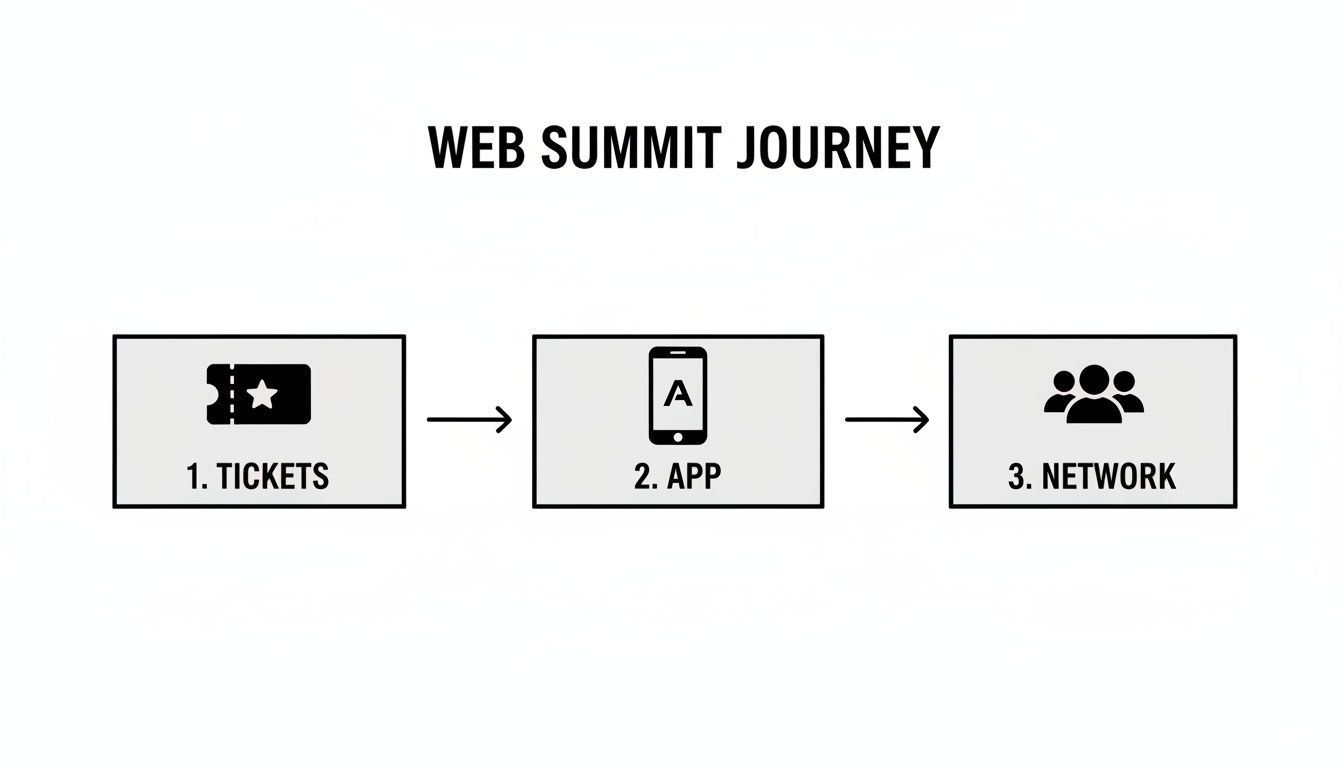
As you can see, getting your tickets and mastering the app early on is what sets you up for proper networking once you're on the ground.
Nail Your Pitch Before You Go
Forget about a ten-minute demo. Standing in a packed exhibition hall or a queue for a coffee, you’ve got about ten seconds to get someone interested. That one-sentence pitch? It’s your most powerful weapon.
Its job isn't to explain everything. Its job is to make someone lean in and ask, "Wait, how do you do that?"
- Bad Pitch: "We are a B2B SaaS company that uses AI to optimise logistics for e-commerce businesses." (Yawn.)
- Good Pitch: "We help e-commerce brands slash their delivery costs by a third, even during the Christmas rush."
See the difference? The second one is a hook. It's all about the result, not the tech. Rehearse it until it rolls off your tongue. A slick pitch is just the start, though. Your online presence needs to be just as sharp. Dive into these founder-focused landing page optimization best practices to make sure your website converts the interest you generate.
Master the Meeting Game
The real magic happens at the side events and informal meetups. The main stage is great for getting inspired, but the smaller rooms are where you'll actually connect with people. Use the app to pinpoint investors or potential partners and ask for meetings at specific, targeted side events.
Don't just ask for a meeting. Propose a specific time and place away from the madness of the main venue. A quiet hotel lobby near the Altice Arena is a hundred times more productive than shouting over the chaos at an exhibition stand.
Remember, the competition is fierce. At a recent summit, 2,725 start-ups from 108 countries were exhibiting, with AI and machine learning making up 35% of them. You had Irish start-ups like Manie, tackling Portugal's $2 billion annual energy overspend, and HealthStay.io, which boosted hospital revenues by 33%. You need a solid plan to stand out.
To give you a head start, here’s a simple checklist to get you organised.
The Founder's Pre-Summit Checklist
This isn't about just showing up; it's about showing up ready to win. Go through these tasks in the weeks leading up to the event to make sure you hit the ground running.
| Task | Objective | Recommended Timeline |
|---|---|---|
| Define Your "Why" | Clearly state your top 3 goals (e.g., meet 5 seed investors, find 2 channel partners). | 6-8 Weeks Out |
| Research & Target List | Identify 20-30 key people (investors, media, partners) you want to meet. | 4-6 Weeks Out |
| Refine Your Pitch | Create and practise a 10-second hook and a 60-second elevator pitch. | 3-4 Weeks Out |
| Book Meetings via App | Start sending personalised meeting requests through the Web Summit app. | 2-3 Weeks Out |
| Prepare Your Materials | Get your digital business card, one-pager, and demo ready to go on your phone. | 1 Week Out |
| Plan Your Schedule | Map out talks, workshops, and side events you absolutely can't miss. | 3-5 Days Out |
Working through this list methodically will put you leagues ahead of the founders who are just winging it.
The Follow-Up Strategy That Actually Works
Your job isn't over when the plane takes off. A quick, personal follow-up email is absolutely critical. Remind them of something specific from your chat—it shows you were actually listening—and give them a clear next step.
- Subject: Great connecting at Web Summit – [Your Company Name]
- Body: A quick sentence to remind them of your value proposition.
- Call to Action: Suggest a 15-minute call next week to explore things properly.
This kind of systematic approach is what separates the tourists from the founders who came to do business. Keep track of every conversation. Being organised with your contacts and finances is a massive green flag for investors. And if you need a hand with that, our guide on the best accounting and bookkeeping software can help you get your back office in order. You can find it at https://scottdylan.com/blog/business/accounting-and-bookkeeping-software/.
Why Investors See It as a Deal-Making Hotspot
Let's flip the script for a moment. For founders, Web Summit is a frantic search for capital. For investors, it's a perfectly organised hunting ground. Thousands of them, from angel investors to partners at the biggest VC firms, descend on Lisbon every November for one reason above all else: efficiency.
Think about the sheer effort it would take to source deals from thousands of start-ups scattered all over the world. We're talking months of travel, endless research, and a soul-crushing number of Zoom calls. The Web Summit HQ experience crams that entire process into one intense, unbelievably productive week. It’s a massive, pre-vetted pipeline of potential investments, all conveniently gathered under one roof.
And this efficiency isn't just a happy accident. The entire event is meticulously engineered to make finding the next big thing as seamless as possible for those holding the purse strings.
A Curated Environment for Deal Flow
Investors get special tools and exclusive access designed to help them cut through the noise and find a genuine signal. It’s not about aimlessly wandering the exhibition floor; it's about targeted, data-driven connections. The whole structure is built to make these encounters happen.
Here’s a look at what makes it so appealing from their side of the table:
- The Matchmaking Algorithm: The official app isn't just a schedule planner; it's a powerful matchmaking engine. Its algorithm connects investors with founders based on industry, funding stage, and stated interests, basically serving up qualified leads on a plate.
- Investor-Only Lounges: These exclusive hideaways offer a calm refuge from the chaos of the main floor. They create the perfect setting for quiet, serious conversations away from the constant buzz.
- The PITCH Competition: This high-profile battle acts as a fantastic filter, putting the most polished and promising start-ups centre stage. For an investor, it’s a curated showcase of top-tier talent.
When you understand the event from an investor's perspective, you can completely change your approach. You're no longer just another start-up in the crowd; you're a potential solution to an investor's biggest challenge: finding the next great company to back.
The sheer volume of investors flocking to Lisbon proves the point. The Web Summit 2025 edition saw a record-breaking 1,857 investors from 86 countries—a whopping 74% surge from the previous year. Even more telling is that start-ups have reportedly raised over $500 million in follow-on funding within six months of past summits. You can see more of these impressive Web Summit investor trends on their blog.
This concentration of capital creates a unique atmosphere where deals can happen incredibly fast. Knowing how investors operate within this ecosystem is your secret weapon. They are looking for founders who not only have a brilliant idea but also have a firm grip on the fundamentals of their business. Having your numbers straight is non-negotiable, so make sure you've read up on our expert advice on business valuation to come prepared for those tough questions.
Finding Opportunities Beyond the Main Stage
Everyone flocks to the keynote speeches at Web Summit, and sure, they're inspiring. But the real game-changing moments? They almost never happen under the main stage lights. The true magic of the Web Summit HQ experience is found in its 'hidden curriculum'—those smaller, more intimate gatherings where the handshakes turn into genuine partnerships.

This is where you stop just swapping business cards and start building proper relationships. For any founder or investor, the niche meetups and industry workshops are absolute gold. They're where you can have a real conversation instead of just collecting another contact for your spreadsheet.
Unlocking the Power of Night Summit
Once the sun goes down in Lisbon, the conference doesn't stop. It just moves into the city's best bars and restaurants for Night Summit. And make no mistake, this isn't just an after-party; it's a fundamental part of the Web Summit strategy.
The whole vibe changes at Night Summit. It’s relaxed, informal, and people let their guard down. A casual chat over a drink can spark a more meaningful collaboration than a dozen rushed, 15-minute meetings on a loud exhibition floor. It’s your chance to riff on ideas and stumble upon those brilliant, unexpected opportunities.
Treat Night Summit as a non-negotiable part of your schedule. It’s where you build rapport and let people see the person behind the pitch deck—and honestly, that's often what closes the deal.
The trick is to find a balance. Don't run yourself ragged trying to catch every single talk. Your best bet is to mix the official schedule with these more spontaneous networking events. That’s how you’ll get the best return on your time and ticket price.
Strategic Mingling and Niche Events
To really cash in on these moments, you need a bit of a plan. Don't just drift from one crowd to another. Pinpoint the events that actually matter to your industry and your goals.
- Industry-Specific Meetups: Dive into the app and hunt down the gatherings for your niche, whether that’s FinTech, HealthTech, or AI. The smaller the group, the deeper and more relevant the conversations will be.
- Workshops and Roundtables: These sessions are built for back-and-forth. They're a brilliant way to show what you know and learn directly from people at the top of their game.
- Country-Specific Gatherings: Loads of national delegations host their own get-togethers. Popping into one of these is a great way to meet local partners or investors with a specific interest in your market.
By zeroing in on these smaller forums, you open the door for those serendipitous run-ins that everyone talks about after Web Summit. In the end, how you connect with people is just as crucial as the numbers in your pitch. For tech founders, having a solid grasp of AI and data analytics can give you a serious advantage in these conversations.
Your Top Questions About Web Summit HQ, Answered
I get asked these questions all the time, so let's clear up some of the most common points of confusion about the Web Summit HQ experience.
Is There a Real Web Summit HQ Office in Lisbon I Can Visit?
Great question, but no, you can't just pop into a corporate office. When people talk about "Web Summit HQ," they're not referring to the company's actual offices. They mean the event itself—the massive annual conference at the Altice Arena.
Think of it this way: for one week in November, the Altice Arena effectively becomes the temporary headquarters for the entire global tech scene. That's the HQ you're there to see.
What's the Smartest Way to Get a Ticket?
My advice is always the same: buy your tickets directly from the official Web Summit website and do it as early as humanly possible. Ticket prices start low and then climb dramatically the closer it gets to the event date, so grabbing an early-bird pass will save you a fortune.
If you're a founder, you absolutely have to look into their ALPHA start-up programme. It’s a fantastic package that gives you a much cheaper ticket and often includes exhibition space for a day. It's a game-changer for early-stage companies.
Attending solo can feel daunting, but it's often more productive. It gives you total flexibility to follow opportunities without being tied to a team's schedule, making it a highly effective trip.
Is It Really Worth It for a Solo Founder?
One hundred per cent, yes. It might seem intimidating to walk into a place with 70,000 people on your own, but Web Summit is practically designed for making connections from scratch.
The official app is your best friend here; you can schedule dozens of meetings before you even land in Lisbon. Plus, there are countless smaller, niche meetups happening all the time. Going it alone means you have the freedom to be completely spontaneous and chase down any interesting conversation or opportunity you stumble upon.
Discover more from Scott Dylan
Subscribe to get the latest posts sent to your email.