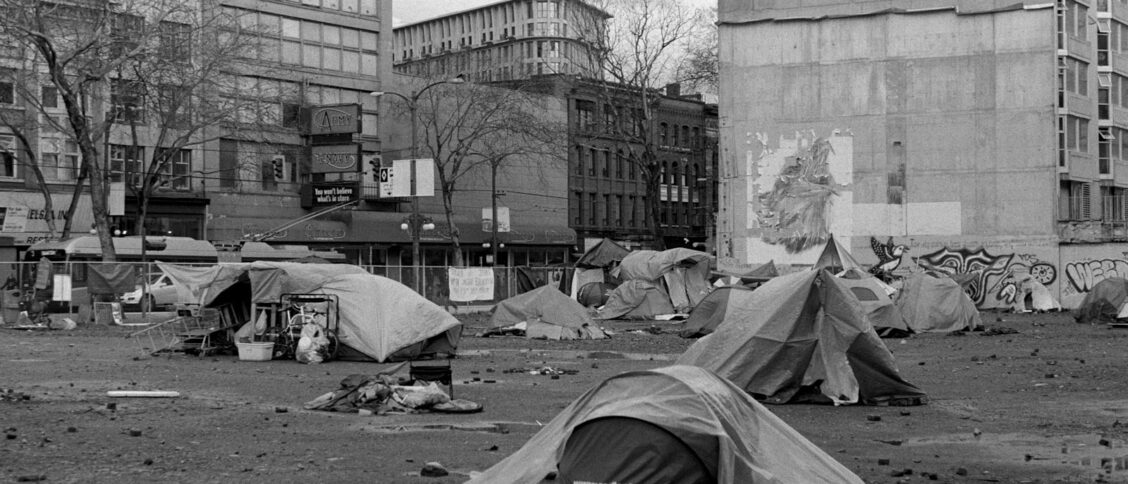
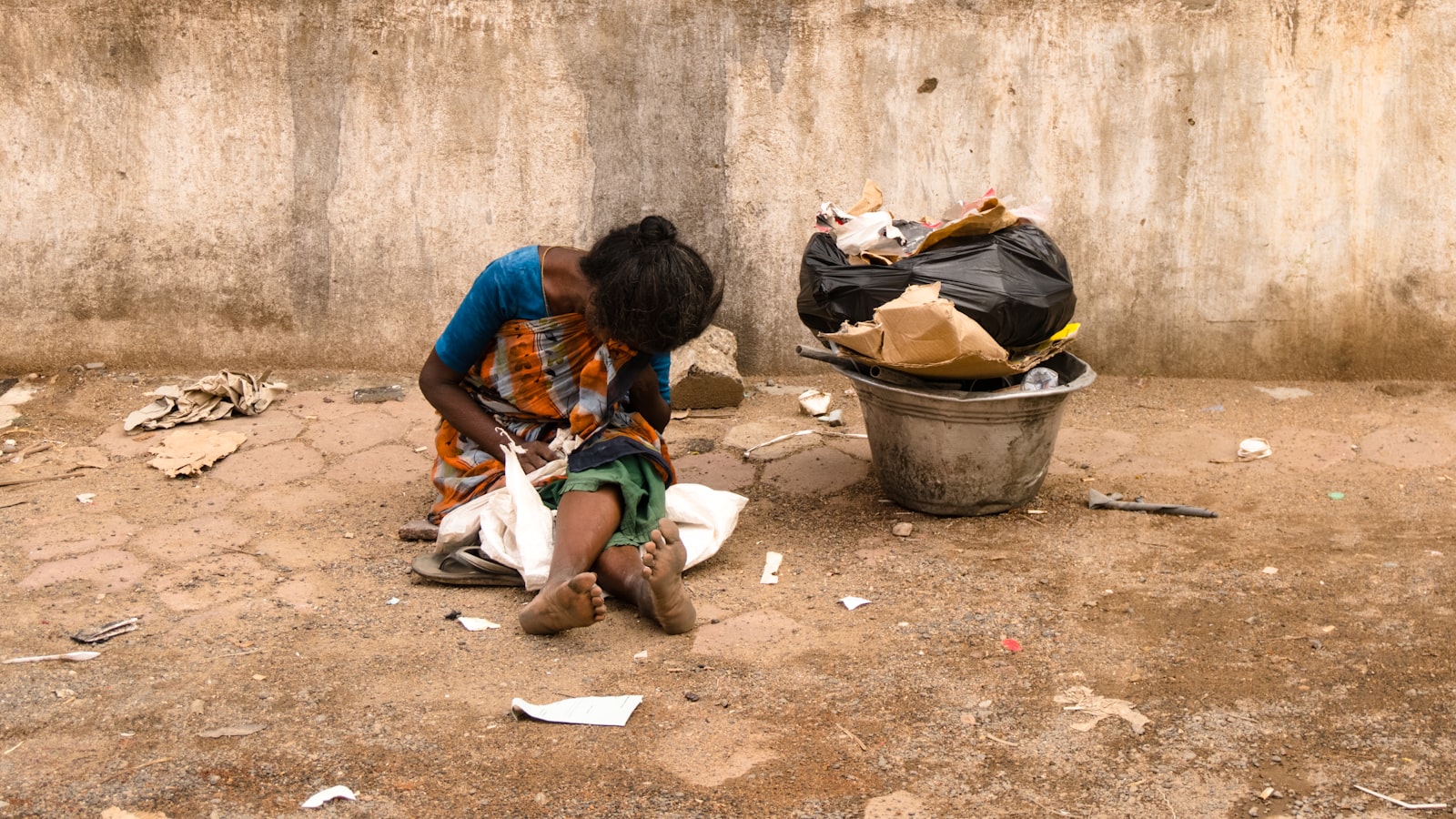
There’s a question I keep asking myself, and it doesn’t have an easy answer: how much psychological damage is caused by not knowing whether you can afford heating this month? How much anxiety accumulates when you’re choosing between paying rent and buying food? These aren’t abstract policy questions. They’re lived realities for millions of people in one of the world’s wealthiest nations. I’ve spent years working on mental health advocacy, and I’ve seen firsthand how poverty doesn’t just restrict material resources. It devastates psychological wellbeing in ways that are profound, persistent, and often invisible to those not experiencing them directly.
The Joseph Rowntree Foundation’s 2024 research painted a picture of Britain that should alarm us all. Over eight million people are living in deep poverty—not the technical poverty line, but genuine deprivation where basic needs aren’t consistently met. That’s roughly one in eight of the population. Among those in deep poverty, mental health problems are not merely more common; they’re substantially more severe. The relationship between poverty and mental health is not correlational. It’s causal. Poverty creates the conditions for psychological harm.
The Cost of Living Crisis: A Mental Health Catastrophe
The cost of living crisis that began in 2022 and extended through 2025 wasn’t just an economic phenomenon. It was a mental health crisis disguised as inflation. Energy prices quadrupled. Rent increased beyond wages. Food costs climbed. Childcare became less affordable. Transport expenses rose. The cumulative pressure on household budgets was extraordinary, and the psychological toll was equally severe. People weren’t just cutting back on luxuries; they were cutting back on essentials, and that creates a state of constant, low-level trauma.
The psychology of financial stress is well documented. When people worry about money, their cortisol levels rise—the stress hormone that, in chronic elevated states, damages health, impairs cognitive function, and increases risk of depression and anxiety. Sleep suffers. Relationships strain under financial pressure. Substance use often increases as a coping mechanism. Suicidal ideation becomes more common. The Mental Health Foundation reported that in 2023, nearly two-thirds of UK adults said money worries had negatively affected their mental health. Not were affecting. Had affected. The damage was already done.
The Broken Benefits System
At the core of Britain’s poverty and mental health crisis sits the benefits system, a structure ostensibly designed to provide a safety net but which increasingly functions as a mechanism that deepens poverty and exacerbates mental health problems. Universal Credit, implemented across the country by 2019, replaced six separate benefits with a single unified system. The theory was sensible: simplify, reduce bureaucracy, improve outcomes. The reality has been catastrophic.
Universal Credit is means-tested, which means it creates a poverty trap where earning additional income results in loss of benefits that often exceeds the additional earnings. The psychological impact is devastating. You work more and end up worse off. That’s not just economically perverse; it’s psychologically destructive. It creates learned helplessness, where people eventually stop trying because effort is futile. Moreover, the application process is complex and conducted entirely online, which excludes many of the most vulnerable—elderly people, those with poor digital skills, those without reliable internet access. The system is designed for a functional adult with stable housing and reliable access to technology. Everyone else struggles.
The assessment process itself is traumatic. Benefit assessments for health-related claims often require people to provide extensive documentation of their conditions, attend multiple appointments, and endure processes that feel adversarial rather than supportive. People with mental health conditions are required to prove their incapacity in ways that feel humiliating. For people with Complex PTSD or autism, sensory-heavy appointment environments and confrontational questioning can trigger trauma responses. The system designed to help makes the help-seeker worse, then blames them for their deterioration.
Food Insecurity and Nutritional Poverty
One of the most visible indicators of poverty’s expansion has been the explosive growth of food banks across the UK. The Trussell Trust, which runs the largest food bank network, reported over 3.1 million food bank referrals in 2023-24, an increase of 36 percent from the previous year. Three million people per year turning to emergency food assistance in a G7 nation. The statistics are numbing because they represent not just material deprivation but psychological shame. Food bank use is traumatic for most people. You’re admitting you can’t feed yourself or your family.
The mental health implications of food insecurity are profound. Children who don’t know where their next meal is coming from develop anxiety disorders at higher rates. Adults who skip meals to feed their children experience depression and hopelessness. The nutritional deficiencies that accompany food insecurity—inadequate vitamins, minerals, protein—directly affect brain function and mental health. Malnutrition is linked to higher rates of depression, schizophrenia, and cognitive decline. The causal pathway is both psychological and biological. Poverty creates the circumstances for mental illness, and those circumstances cascade down to the cellular level.
Health Inequality and the Social Determinants
The concept of social determinants of health—the conditions in which people are born, grow, live, work, and age—is central to understanding why poverty and mental health are so intertwined. The Office for National Statistics and the Institute for Fiscal Studies have consistently shown that health outcomes are strongly predicted by wealth and employment status. Poverty isn’t just a context for mental illness; it’s a cause of it. The causal pathways are multiple: chronic stress, food insecurity, housing instability, limited access to healthcare, social isolation, and accumulated trauma all flow from poverty and all damage mental health.
What’s particularly brutal is that these mechanisms operate simultaneously and reinforce each other. Poverty causes stress, which impairs cognitive function and decision-making. That leads to worse job performance and increased risk of dismissal, which deepens poverty. Housing instability follows, which increases stress further. Mental health deteriorates, which reduces ability to work. Employment becomes even less stable. The cycle accelerates downward. By the time someone reaches severe mental health crisis, they’re often living in precarious housing, food insecure, isolated from social support networks, and completely disconnected from the healthcare system. The illness and the poverty have become inseparable.
The Specific Challenges for Mental Health Conditions
People with existing mental health conditions face particular vulnerabilities in poverty. If you have depression, the cognitive symptoms—reduced motivation, difficulty concentrating, fatigue—make it harder to navigate complex benefits systems, to job search, to maintain employment. If you have anxiety, the financial stress of poverty triggers symptom escalation. If you have bipolar disorder, the instability of poverty can destabilise mood states. If you have Complex PTSD, the chronic stress of poverty maintains a state of hypervigilance and threat detection. The illness and the poverty amplify each other in ways that create nearly impossible situations for individuals caught in them.
I know this from personal experience. I was diagnosed with Complex PTSD relatively late in life, and I’m profoundly grateful that I had financial security when that diagnosis arrived. I could afford to take time off work. I could access private therapy when NHS waiting lists stretched for months. I could afford medication if I needed it. I could afford safe housing that I wasn’t worried about losing. Not everyone has those resources. Many people with Complex PTSD, autism, bipolar disorder, or other serious conditions are also poor. They’re trying to manage severe psychological conditions while simultaneously managing severe financial stress. It’s extraordinarily difficult, and many don’t survive the attempt.
Mental Health Assessments and Work Capability
The Work Capability Assessment, which determines whether someone is eligible for employment-related support allowance or able to work, has become a flashpoint for the intersection of poverty and mental health. The assessment process was designed to identify people who are truly unable to work, but it’s implemented in ways that often harm rather than help. People with invisible disabilities—mental health conditions, autism, learning disabilities—often fail to qualify for support despite being unable to maintain consistent employment.
The assessment itself is frequently experienced as retraumatising by people with mental health conditions. You’re required to describe your suffering in clinical detail to a stranger in a sterile environment, often within strict time limits. If you become anxious or distressed during the process, that’s sometimes interpreted as evidence that you’re exaggerating your condition. If you can maintain composure, that’s interpreted as evidence that you’re not as ill as you claim. It’s an impossible situation. The system is set up so that almost no one can genuinely succeed at presenting their case authentically. Either you break down and are presumed to be unreliable, or you hold it together and are presumed to be fine.
Social Isolation and Mental Health
Poverty often leads to social isolation, which is itself a major risk factor for mental health problems. When you can’t afford to participate in activities, to see friends, to travel to social events, you become isolated. When you’re ashamed about your financial situation, you withdraw from friendships. When you’re depressed from poverty-related stress, social interaction becomes more difficult. Over time, the social networks that provide psychological support and protection deteriorate. The risk of severe mental health crisis—including suicidal ideation—increases dramatically when social isolation combines with poverty.
The Campaign to End Loneliness has highlighted how poverty contributes to loneliness, which has health effects equivalent to smoking fifteen cigarettes per day. The causal chain is clear: poverty leads to reduced social participation, which leads to loneliness, which accelerates mental and physical health decline. And unlike direct poverty-reduction interventions, loneliness is often not addressed because it’s seen as a secondary issue rather than a fundamental mental health problem. Someone can be poor and socially isolated, developing severe depression and anxiety that goes untreated because the focus is on material support rather than social connection.
Intergenerational Transmission of Poverty and Trauma
Perhaps the most insidious aspect of poverty and mental health intersection is how it transmits across generations. Children growing up in poverty experience chronic stress, which affects neural development during critical periods. Their brains develop in an environment of threat and uncertainty. That creates lasting changes in stress response systems, in emotional regulation capacity, in ability to form secure attachments. These children are more likely to develop mental health problems themselves. They’re more likely to drop out of school. They’re more likely to experience unemployment. They’re more likely to remain in poverty as adults. The cycle perpetuates itself, and psychological damage accumulates.
This is not about individual failure or bad parenting. This is about the brutal reality that poverty changes brains, and changed brains have more difficulty escaping poverty. A child growing up in poverty gets less sleep due to stress and poor housing conditions. Less sleep impairs cognitive development and academic performance. Poor academic performance leads to lower qualifications. Lower qualifications lead to lower earnings. Lower earnings lead to poverty. And their children will inherit the same disadvantages, with trauma added on top. It’s not a cycle anyone can bootstrap themselves out of alone.
Access to Mental Healthcare in Poverty
The NHS provides mental healthcare theoretically free at the point of use, which is crucial. But in practice, accessing mental health services when you’re poor is extraordinarily difficult. Appointments are often during working hours, and taking time off work when you’re poor is often impossible. If you take unpaid time off, you lose income you desperately need. If you try to schedule around work hours, there are few options. Many services require a GP referral, which means getting an appointment with your GP first—another hurdle. Once in the system, waiting lists for specialist treatment can stretch for months. In that time, your condition worsens. Your circumstances deteriorate further.
Moreover, the psychological therapy most effective for many conditions—particularly trauma-focused therapy like EMDR or trauma-informed CBT—often requires multiple sessions over weeks or months. If you’re in poverty and dealing with housing instability, food insecurity, or other acute crises, your brain is not in a state optimised for therapeutic work. You’re in survival mode. Therapy requires a certain baseline of stability to be effective. The system that needs to help people the most—those in poverty with severe mental health conditions—is the least able to actually help them because it can’t address the fundamental material precarity that makes recovery impossible.
Substance Use as a Coping Mechanism
In the intersection of poverty and mental health, substance use often emerges as a coping mechanism. Alcohol and drugs temporarily relieve the psychological pain of both poverty and untreated mental illness. They’re accessible. They work—at least initially. But they create a new problem on top of existing ones. Substance use disorders develop, which worsen both poverty and mental health. Earnings decrease due to reduced capacity or time spent acquiring and using substances. Legal consequences sometimes follow, which further reduce employment opportunities. Health problems accumulate. The substances that provided short-term relief become long-term catastrophes.
The cycle is particularly vicious because treatment for substance use disorders often isn’t accessible to people in poverty. Rehabilitation programmes require time off work or housing stability. Medication-assisted treatments like methadone maintenance require regular attendance at clinics. If you’re poor and unstable, these requirements are extraordinarily difficult to meet. So substance use becomes another facet of poverty, another symptom of untreated mental health conditions, another reason for further deterioration. The individual trapped in this situation is not lacking in willpower or motivation. They’re facing a set of structural problems that are nearly impossible to overcome alone.
What Evidence-Based Solutions Actually Look Like
The evidence for what actually works in addressing poverty-related mental health problems is increasingly clear. Housing First initiatives, which provide stable housing to people experiencing homelessness without preconditions, are highly effective. People need stability before recovery becomes possible. Once someone has secure housing, their capacity for therapeutic engagement, employment, and social connection dramatically improves. This isn’t surprising. It’s what human psychology tells us it should be. You can’t therapise trauma when the person is sleeping on the streets.
Income support that’s adequate and accessible is another evidence-based intervention. When people have enough money to meet basic needs without jumping through humiliating bureaucratic hoops, their mental health improves. Some trials of unconditional basic income have shown improvements in mental health outcomes. It’s not mysterious why: if you’re not constantly stressed about affording food and heating, your brain functions better. Universal Credit should work this way, but instead it’s been designed with punitive mechanisms that increase stress rather than decrease it. A reformed benefits system that prioritised individual wellbeing over deficit reduction would save money on healthcare costs while improving lives.
Mental health services that are specifically designed for people in poverty are also essential. Services need to be accessible outside of working hours. They need to address material needs alongside psychological ones. They need to incorporate peer support from people with lived experience of poverty and mental health challenges. They need to be trauma-informed and culturally sensitive. They need to treat substance use and mental health conditions together rather than separately. Most importantly, they need to acknowledge that poverty is a problem that requires structural solutions, not individual therapy that ignores the context in which psychological distress develops.
The Political Will Gap
The fundamental barrier to solving poverty-related mental health problems isn’t knowledge or technical capacity. We know what works. The barrier is political will and resource allocation. Addressing poverty requires investing in social security systems, housing, healthcare, and education. It requires higher taxes on wealthier individuals and corporations. It requires prioritising wellbeing over GDP growth. None of these are technically difficult. They’re politically difficult because they threaten entrenched interests and require a different conception of what government is supposed to do.
The fact that eight million people are in deep poverty in a wealthy nation is not a failure of individual effort. It’s a failure of policy and political choice. We could eliminate deep poverty if we chose to. We could ensure everyone had adequate housing, food, and healthcare. We could create benefits systems that supported rather than humiliated. We could fund mental health services adequately. We’re not doing these things not because they’re impossible, but because we’ve made different choices about how to allocate resources. Those choices have consequences for millions of people whose mental health suffers as a result.
What Individual Action Can Achieve
If you’re not in poverty, the question is what you do with that security. You can advocate for policy changes that would address structural poverty. You can support organisations working on poverty and mental health. You can challenge the stigma around poverty and benefit use. You can shift your perspective on why poverty exists—not because poor people are lazy or unmotivated, but because systems are designed to maintain it. You can vote for politicians who prioritise wellbeing over austerity. You can speak up when people you know express contempt for people in poverty or on benefits. You can examine your own assumptions about what poverty means about someone’s character.
If you’re in poverty or experiencing poverty-related mental health challenges, please know that your situation is not your failure. It’s the result of structural forces far beyond your control. The mental health consequences you’re experiencing are normal responses to abnormal circumstances. You deserve support, safety, and dignity. That these aren’t guaranteed under current systems isn’t a reflection of your worth. Reach out for help when you can. Build connections with others in similar situations. Know that change is possible, that different futures are possible, and that your life has value regardless of your current economic circumstances. The system is failing you. You’re not failing.
Discover more from Scott Dylan
Subscribe to get the latest posts sent to your email.
Scott Dylan is Dublin based British entrepreneur, investor, and mental health advocate. He is the Founder of NexaTech Ventures, a venture capital firm with a £100 million fund supporting AI and technology startups across Europe and beyond. With over two decades of experience in business growth, turnaround, and digital innovation, Scott has helped transform and invest in companies spanning technology, retail, logistics, and creative industries.
Beyond business, Scott is a passionate campaigner for mental health awareness and prison reform, drawing from personal experience to advocate for compassion, fairness, and systemic change. His writing explores entrepreneurship, AI, leadership, and the human stories behind success and recovery.
Scott Dylan is Dublin based British entrepreneur, investor, and mental health advocate. He is the Founder of NexaTech Ventures, a venture capital firm with a £100 million fund supporting AI and technology startups across Europe and beyond. With over two decades of experience in business growth, turnaround, and digital innovation, Scott has helped transform and invest in companies spanning technology, retail, logistics, and creative industries.
Beyond business, Scott is a passionate campaigner for mental health awareness and prison reform, drawing from personal experience to advocate for compassion, fairness, and systemic change. His writing explores entrepreneurship, AI, leadership, and the human stories behind success and recovery.