The Supply Chain Revolution Nobody’s Talking About
Supply chain management is not glamorous. It doesn’t inspire venture capital pitches or dominate tech conference conversations the way generative AI or quantum computing do. But in terms of actual economic impact, supply chain optimisation is one of the most significant applications of artificial intelligence right now. A small percentage improvement in supply chain efficiency—a few percentage points in inventory reduction, a handful of percent in transportation cost savings—translates into billions of pounds in economic value creation. Companies are racing to implement AI-driven supply chain solutions, and the competitive advantage will accrue to those who move fastest.
What’s happening in logistics and supply chains right now is a transformation as profound as the one that followed containerisation or the adoption of the internet. Except this one is happening faster, is less visible to the general public, and will reshape retail, manufacturing, and trade in ways we’re only beginning to understand. I’ve spent time with logistics companies, with warehouse managers, with supply chain directors, and the consensus is clear: AI is moving from interesting experiment to essential competitive necessity. If you’re not implementing AI in your supply chain, you’re becoming less competitive every quarter.
Demand Forecasting: From Guesswork to Precision
The fundamental problem in supply chain management has always been prediction. You need to know how much product to manufacture or stock at different locations, what’s going to sell where, when demand will spike or drop. Get it wrong and you’re overstocked with unsaleable inventory or understocked during periods of high demand. Both are expensive. Overstock ties up capital in dead inventory. Understock loses sales and damages customer relationships. Traditional demand forecasting relied on historical data, seasonal patterns, and a lot of human judgement. It was surprisingly inaccurate.
AI-driven demand forecasting changes this fundamentally. Machine learning models can ingest massive volumes of data—historical sales, seasonality, market trends, social media signals, weather patterns, economic indicators, competitor behaviour, promotional calendars—and identify patterns that humans would miss. These models can predict demand with remarkable accuracy, often within three to five percent. More remarkably, they can update continuously as new data arrives, adapting to changing conditions in real time. A sudden viral trend on social media can now be detected and reflected in forecast adjustments within hours rather than weeks.
The financial implications are enormous. Retailers report that implementing AI demand forecasting reduces inventory carrying costs by five to twenty percent depending on their specific circumstances. For a company with billions in annual inventory, that’s hundreds of millions in freed-up capital. That capital can be reinvested in growth, in price reductions for customers, in employee wages, or distributed to shareholders. Moreover, accuracy improvements mean fewer stockouts and better customer satisfaction. Customers find the products they want, which drives repeat purchases and brand loyalty. The compounding effects over years are substantial.
What’s particularly valuable is that demand forecasting AI becomes more accurate the more data it processes. Companies with sophisticated supply chains and decades of transactional data can train models that are extraordinarily predictive. This creates a structural advantage for established companies with rich data. Startups and smaller competitors struggle because they lack the historical data to train models effectively. The gap between sophisticated AI-powered forecasting and traditional methods widens with each year. It’s becoming a critical competitive differentiator.
Warehouse Automation and Robotics
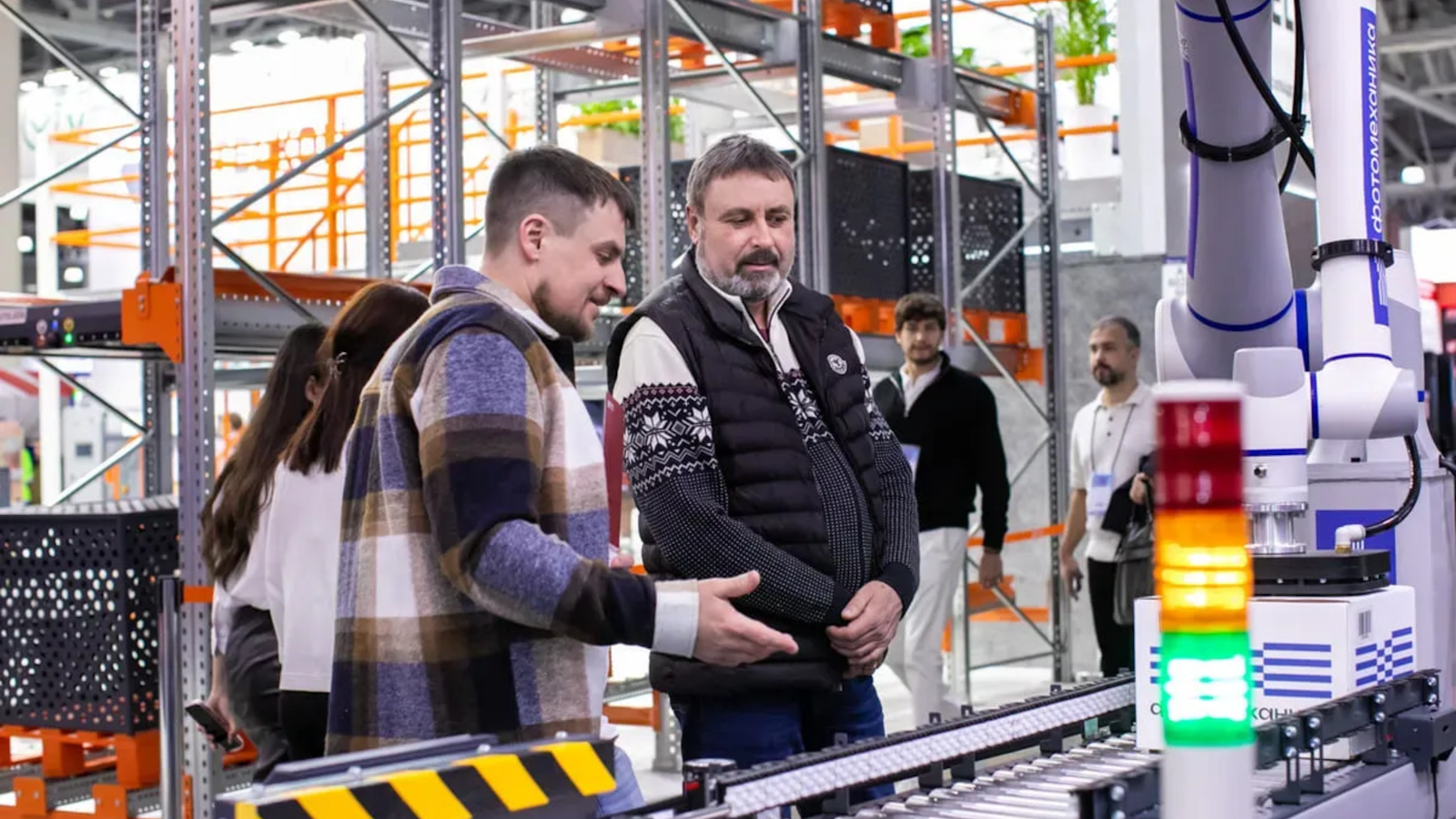
If demand forecasting is the brain of modern supply chains, warehouse automation is the muscle. The image of warehouses as vast spaces filled with humans picking items has been steadily replaced by landscapes of robots and automated systems. Companies like Amazon, Ocado, and others have deployed tens of thousands of robots in their facilities. The robots perform picking, packing, sorting, and movements of inventory. They work alongside human staff in collaborative workflows or independently in fully automated operations. The speed, accuracy, and consistency they provide is simply not achievable through human labour alone.
What makes modern warehouse automation particularly powerful is that it’s increasingly driven by AI. Computer vision systems identify items, verify they’re correct before shipment, and detect errors. Machine learning algorithms optimise warehouse layouts and picking routes in real time. Robots learn from experience, improving their performance. The systems adapt to changing inventory, to different product types, to peak versus off-peak demands. A warehouse that operated on manual processes three years ago can now process ten times the volume with a smaller workforce and higher accuracy.
The UK warehouse and logistics sector has been transformed by automation. The British Retail Consortium has reported that investment in warehouse automation has accelerated significantly since 2023. Companies report improvements in picking accuracy of up to ninety-eight percent, labour productivity improvements of thirty to forty percent, and dramatic reductions in workplace injuries due to repetitive tasks now being automated. The question facing warehouse operators now is not whether to automate—that’s table stakes—but how rapidly to automate and how to manage the workforce transition.
Route Optimisation and Last-Mile Delivery
One of the largest costs in supply chains is delivery, particularly last-mile delivery—getting products from distribution centres to end customers. Route optimisation algorithms have been around for decades, but they were relatively simple. Visit these addresses in an order that minimises total distance. It sounds straightforward, but as the number of delivery points increases, the problem becomes computationally complex. With hundreds or thousands of deliveries per day across multiple vehicles, finding genuinely optimal routes becomes nearly impossible through manual planning.
Modern AI-driven route optimisation takes this to another level. Systems can optimise not just for distance or time, but for multiple objectives simultaneously: fuel costs, driver availability, vehicle capacity, time windows for delivery, weather conditions, traffic patterns, and customer preferences. The system can reoptimise routes in real time as new orders come in or as traffic conditions change. A driver stuck in congestion on one route might have that route reoptimised to avoid further delays while other drivers are redirected to handle the originally planned deliveries. The efficiency gains are remarkable. Companies report five to twenty percent reductions in delivery costs through AI-driven route optimisation.
For last-mile delivery specifically—the final step from distribution centre to customer address—the implications are profound. Delivery is often the most expensive part of the supply chain, and for many e-commerce companies, the thin margins mean that delivery costs determine profitability. AI-driven route optimisation can turn an unprofitable delivery model into a profitable one. This explains why companies like Amazon, Ocado, and other logistics operators have invested so heavily in AI-driven optimisation. It’s not just an operational improvement; it’s a business model prerequisite.
Post-Brexit Supply Chain Challenges
The United Kingdom’s departure from the European Union fundamentally altered supply chain economics. Where previously goods could move freely across the border, now they require customs documentation, regulatory compliance checks, and navigate different tariff regimes. The complexity increased substantially, and the costs increased alongside. UK logistics companies faced new challenges: managing customs processes, dealing with regulatory divergence, navigating tariffs, and adjusting to longer lead times. The shock to supply chains was significant.
AI has become essential in managing this increased complexity. Customs documentation requires precise classification of goods, declaration of origin, value assessments, and compliance with regulatory requirements. This process was previously manual and slow. Now, AI systems can analyse product information, determine proper classification, identify required documentation, and even predict likely issues before goods reach border checkpoints. Companies using AI-driven customs management report faster clearance times and fewer delays. Road Haulage Association data shows that Brexit-related delays have been significantly reduced for companies implementing automated systems compared to those relying on manual processes.
Supply chain visibility has become critical post-Brexit. Where goods are at any point in the supply chain, what documents are associated with them, what regulatory requirements apply—this information needs to be accurate and accessible. AI systems now track goods throughout their journey, predict delays, alert supply chain managers to issues, and recommend corrective actions. A food shipment that requires temperature maintenance can be monitored automatically, with alerts if temperatures deviate. A shipment stuck at customs can be flagged automatically, with recommendations for resolving the issue. Without these systems, post-Brexit supply chains would be considerably more chaotic.
UK Logistics Industry Transformation
The UK logistics industry is roughly a £120 billion sector representing about five percent of GDP and employing approximately two million people directly. It’s a foundational industry. Everything delivered in the UK depends on logistics. The transformation happening now through AI adoption is not marginal. Companies are being reshaped. Competitive advantages are being created and destroyed. The industry is moving faster than many participants realise. If you’re operating a traditional logistics business using relatively standard processes, you’re falling behind competitors who’ve invested in AI.
Large companies like DHL, Maersk, and others have already made substantial investments in AI-driven supply chain systems. They’re implementing demand forecasting, warehouse automation, route optimisation, and predictive maintenance. Smaller operators are following, with software providers making AI tools more accessible and affordable. The lag between leader and laggard is widening. Within five years, it’s likely that most competitive logistics operations will be AI-driven. Those that haven’t made the transition will either improve quickly or exit the market. The selection pressure is intense.
Autonomous Vehicles in Freight: The Next Frontier
If demand forecasting is the brain and warehouse automation is the muscle, autonomous vehicles in freight might be the next major transformation—though it’s still developing. Autonomous heavy goods vehicles (HGVs) for long-distance freight have enormous potential. A fully autonomous vehicle doesn’t need driver breaks, can operate 24/7, doesn’t need wage payments, and removes a significant cost from logistics economics. For long-distance freight on relatively simple routes, autonomous operation is increasingly feasible. Technology companies like Waymo and others have been testing autonomous freight in recent years, and the technology is approaching viability.
The implications for the UK logistics sector are substantial. The Road Haulage Association reported in 2024 that there are approximately 40,000 HGV driver vacancies across the UK, with drivers retiring faster than they can be replaced. Autonomous vehicles could resolve this capacity issue. However, the transition will be disruptive. Many professional drivers could face displacement if autonomous vehicles become viable. There are questions about safety, liability, regulatory approval, and employment impacts that remain unresolved. Nonetheless, the trajectory is clear. Autonomous freight is coming, and supply chains are being readied for it.
In the near term—next three to five years—we’ll likely see autonomous vehicles deployed on specific high-traffic routes under specific conditions: long-distance intermodal freight on motorways with relatively simple operating environments. Complex urban delivery will remain human-driven for longer. But the structural shift will be profound. Supply chains will need to adapt to vehicles that operate differently, communicate differently, and have different failure modes than human-driven vehicles. This will drive further AI investment in fleet management, vehicle coordination, and adaptive routing.
Predictive Maintenance and Asset Management
A less visible but equally important application of AI in supply chains is predictive maintenance of logistics infrastructure and vehicles. A breakdown of a delivery vehicle can cascade into delays for dozens of customers and loss of revenue for the operator. Maintenance is expensive but necessary. Traditionally, companies maintained vehicles on fixed schedules—regular maintenance at regular intervals—or reactively when breakdowns occurred. Neither is optimal. Preventive maintenance on a rigid schedule means maintaining vehicles that don’t need maintenance yet. Reactive maintenance means dealing with emergency situations.
AI-driven predictive maintenance changes this. Sensors on vehicles monitor hundreds of parameters—engine temperature, vibration, fluid pressure, electrical signals. Machine learning models analyse these signals to predict failures before they occur. Maintenance can be scheduled precisely when needed, before failure happens. The benefits are substantial: reduced unexpected downtime, extended vehicle lifespan, lower maintenance costs. Logistics companies report that predictive maintenance reduces vehicle downtime by thirty to fifty percent. For a large fleet, that’s extraordinary value. A logistics company with 10,000 vehicles can realise millions in additional availability through predictive maintenance alone.
The same principle applies to warehouse equipment, sortation systems, and other critical infrastructure. AI systems monitor equipment performance in real time, predict failures, and schedule maintenance precisely when needed. The result is fewer disruptions, higher throughput, and lower costs. As logistics operations become increasingly automated and AI-driven, the ability to maintain that automation reliably becomes critical. Predictive maintenance is part of the necessary infrastructure that makes large-scale automation viable.
Inventory Optimisation and Just-In-Time Evolution
Just-in-time inventory management—keeping minimal inventory on hand and replenishing based on actual demand—has been a cornerstone of modern supply chains for decades. It reduces inventory carrying costs and working capital requirements. However, it requires extraordinary visibility into supply chains and accurate demand forecasting. If demand spikes unexpectedly or supply is disrupted, just-in-time systems struggle. AI enables far more sophisticated inventory management strategies that can simultaneously minimise inventory levels while reducing risk of stockouts.
AI systems can simulate different inventory strategies against historical data and predicted future scenarios. They can determine optimal inventory levels for different products at different locations, accounting for factors like demand variability, supply lead times, carrying costs, stockout penalties, and shelf-life constraints. Products with stable demand and long shelf lives can be kept at minimal levels. Products with volatile demand or critical importance can be stocked more generously. Raw materials for manufacturing can be managed differently than finished goods for retail. The system adapts continuously as conditions change.
For supply chains that were disrupted by Covid-19 and Brexit, this adaptive inventory management has been particularly valuable. The pandemic revealed that just-in-time systems were brittle when faced with unexpected disruption. Many companies are now using AI to maintain somewhat higher inventory levels in critical areas while still minimising overall carrying costs. The balance is dynamic, adjusting as supply chain risk changes. This allows companies to be resilient to disruptions while not maintaining excessive, costly inventory.
Supplier Management and Risk Assessment
Supply chains are only as strong as their weakest supplier. A critical supplier failure can cascade through an entire supply chain, disrupting operations and costing millions. Companies increasingly need to understand not just their direct suppliers but second-tier and third-tier suppliers, understanding concentration of risk, identifying single points of failure, and assessing financial health of suppliers. This is complex work that traditionally relied on quarterly meetings, spreadsheets, and experienced judgement.
AI is transforming supplier risk management. Systems can aggregate data from multiple sources—financial reports, court records, news articles, supply chain databases—to build profiles of suppliers. Machine learning models can identify indicators of financial distress, regulatory issues, quality problems, or other risks. Systems can map supply chain relationships and identify concentration of risk. Early warning systems can alert companies to potential problems before they become critical. Companies can then take proactive steps to find alternative suppliers or mitigate risk.
This is particularly valuable in a post-Brexit UK environment where supply chains have become more complex and geographically diverse. Companies sourcing from European, Asian, and other suppliers need to understand risks across different regulatory regimes, different currencies, different labour standards. AI-driven supplier assessment helps companies navigate this complexity. It’s not perfect—geopolitical events can still surprise—but it’s far better than the alternative of relying on limited information and experience.
The Human Dimension: Workforce Transition
The transformation of supply chains through AI and automation has profound implications for workers in logistics and warehouse operations. Certain jobs are genuinely at risk. Simple, repetitive tasks like picking items in warehouses, sorting packages, or packing boxes are increasingly automated. These were often entry-level positions that provided income for people without specialised qualifications. As these roles disappear, what happens to the people who held them?
The honest answer is uncertain. Some workers will transition to operating or maintaining automation systems. Some will move to roles that require human skills that haven’t yet been automated—complex problem-solving, customer interaction, quality assessment. Some may leave the industry entirely. The transition will not be smooth. There will be periods of unemployment, retraining requirements, wage adjustments, and genuine hardship for some workers. This is the reality of technological disruption. It’s not uniformly negative—the economy overall becomes more productive, which creates gains—but those gains are often distributed to capital and skilled workers while workers in disrupted roles bear the costs.
Companies and policymakers need to take seriously the obligation to manage this transition responsibly. That means investing in retraining programmes, supporting displaced workers, being transparent about automation timelines, and avoiding the pretence that disruption isn’t happening. Some companies are doing this well, creating new roles for workers as automation increases, investing in training, and managing the transition thoughtfully. Others are simply automating without consideration for workforce impacts. The variance in approach reflects different company cultures and values, but all companies should be making deliberate choices about how they manage the human costs of automation.
The Competitive Landscape
The race to implement AI in supply chains is creating new competitive dynamics. Large companies with capital and technical talent can invest heavily in custom AI solutions. They develop proprietary capabilities that become difficult for competitors to match. Smaller operators lack resources for custom development but can access software solutions from providers who build general-purpose AI supply chain tools. The advantage flows to companies that can either build custom capabilities or access sophisticated software early.
Software providers are proliferating. Companies offering AI-driven demand forecasting, route optimisation, warehouse management, and supplier assessment are growing rapidly. Some are startups building specialised solutions. Others are established software companies expanding into AI. The competitive dynamic is intense but also democratising—as software becomes more affordable and accessible, smaller companies can access capabilities that were previously available only to large enterprises. This is healthy competition that should accelerate AI adoption across the UK logistics sector.
Environmental and Sustainability Implications
There’s an environmental angle to supply chain AI that’s often overlooked. More efficient supply chains mean fewer vehicles on roads, less fuel consumed, lower carbon emissions. Better demand forecasting means less overproduction and less waste. More accurate inventory management means less product deterioration and disposal. Optimised routes mean shorter journeys. Predictive maintenance means less vehicle breakdowns and emergency repairs. In aggregate, AI-driven supply chain optimisation reduces environmental impact. For companies trying to meet net-zero targets, this is increasingly important.
Some companies are making environmental optimisation an explicit goal of their AI systems. Instead of optimising purely for cost, they’re optimising for cost and carbon emissions simultaneously. This can mean slightly higher financial costs for lower environmental impact. Some consumers and B2B customers are willing to pay for this. Regulatory pressure is also increasing. The incoming emissions trading systems and carbon pricing mechanisms will make environmental efficiency economically valuable. AI systems that optimise for both cost and emissions will have advantages in this future. This is an area where AI adoption and environmental responsibility align rather than conflict.
Looking Forward: The Next Five Years
The supply chain transformation through AI is accelerating. Over the next five years, I expect demand forecasting to become standard across retail and manufacturing. Warehouse automation will continue expanding, with more facilities becoming fully or partially automated. Route optimisation will improve, with vehicles increasingly communicating to coordinate deliveries and reduce redundancy. Autonomous freight vehicles will begin deploying on specific routes. Predictive maintenance will become essential infrastructure. The competitive gap between AI-enabled and traditional logistics operations will widen dramatically.
For companies involved in supply chains—whether manufacturers, retailers, logistics providers, or technology vendors—the time to invest in AI capabilities is now. The window for moving from interesting experiment to competitive necessity is closing. Companies that have already invested will have advantages that will be difficult to overcome. Companies that wait will find themselves racing to catch up with competitors who’ve moved earlier. The UK logistics sector is in the midst of a transformation as significant as containerisation or the internet. What happens over the next few years will determine competitive positions for decades. It’s worth taking seriously.
Scott Dylan is Dublin based British entrepreneur, investor, and mental health advocate. He is the Founder of NexaTech Ventures, a venture capital firm with a £100 million fund supporting AI and technology startups across Europe and beyond. With over two decades of experience in business growth, turnaround, and digital innovation, Scott has helped transform and invest in companies spanning technology, retail, logistics, and creative industries.
Beyond business, Scott is a passionate campaigner for mental health awareness and prison reform, drawing from personal experience to advocate for compassion, fairness, and systemic change. His writing explores entrepreneurship, AI, leadership, and the human stories behind success and recovery.
Scott Dylan is Dublin based British entrepreneur, investor, and mental health advocate. He is the Founder of NexaTech Ventures, a venture capital firm with a £100 million fund supporting AI and technology startups across Europe and beyond. With over two decades of experience in business growth, turnaround, and digital innovation, Scott has helped transform and invest in companies spanning technology, retail, logistics, and creative industries.
Beyond business, Scott is a passionate campaigner for mental health awareness and prison reform, drawing from personal experience to advocate for compassion, fairness, and systemic change. His writing explores entrepreneurship, AI, leadership, and the human stories behind success and recovery.