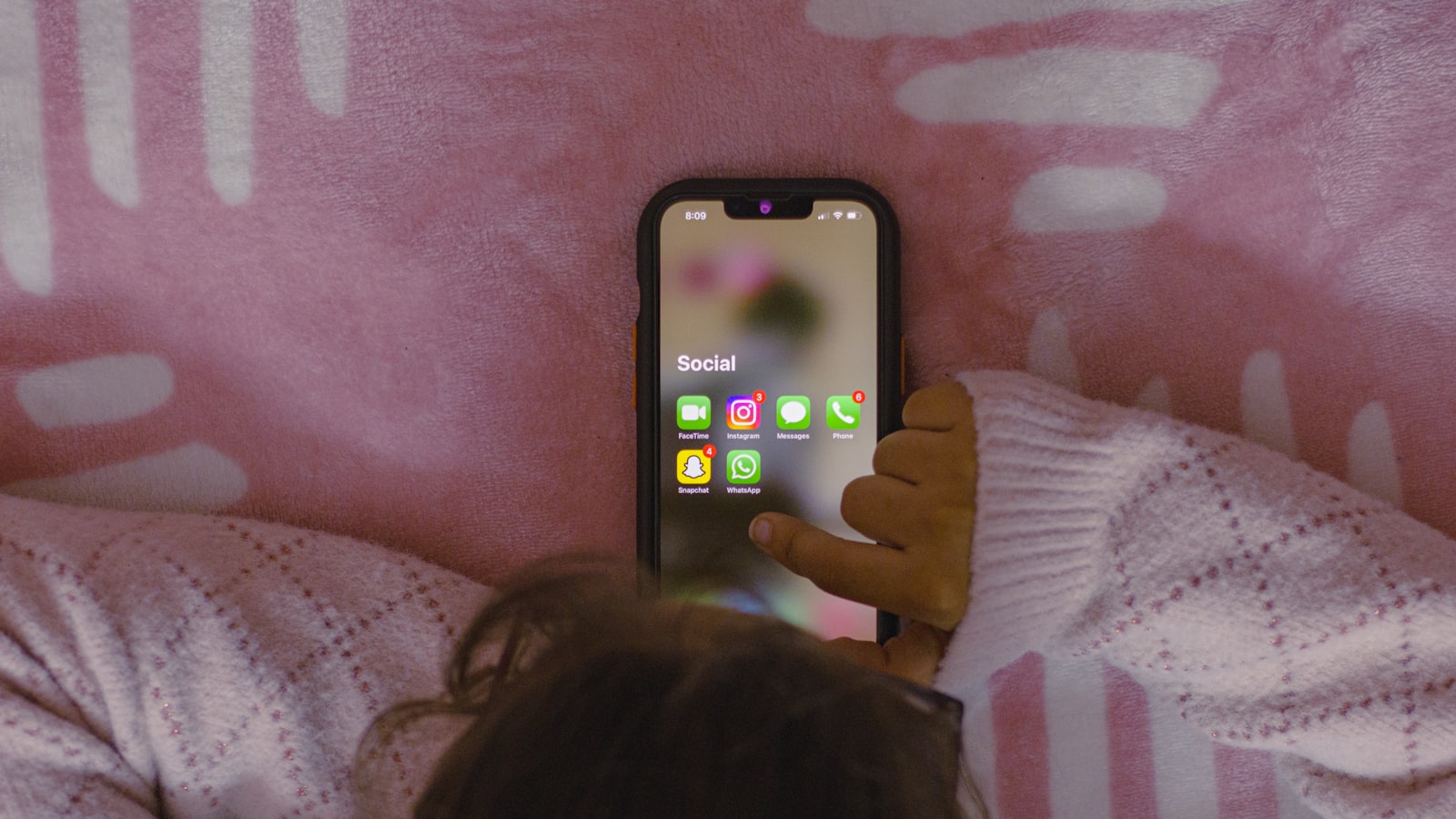
There’s a pervasive assumption in conversations about social media and mental health that the real problem is young people—teenagers scrolling TikTok at midnight, young adults obsessing over Instagram comparisons. Meanwhile, adults are supposed to be immune to these psychological traps. We’re supposedly more grounded, more secure in our identities, more resistant to manipulation. Yet after several years of working in mental health advocacy through Inside Out Justice and observing the psychological landscape through my own struggles with Complex PTSD and autism, I’ve come to a different conclusion: the mental health impact of social media on adults is profound, widespread, and dangerously underestimated. In fact, adults might be more vulnerable in some ways than younger users, precisely because we’ve come of age without these platforms and lack the frameworks to manage them effectively. This post explores what the evidence actually shows about social media’s impact on adult mental health, and more importantly, what we can do about it.
The Scope of the Problem: UK Data on Adult Social Media Use
Let’s begin with the basic facts about how many UK adults use social media and how much time they spend on these platforms. According to Ofcom’s 2025 media consumption report, 76% of British adults aged 25-54 use social media regularly, and that percentage increases to 82% when including those who check social media at least weekly. The average UK adult now spends approximately 1 hour and 57 minutes per day on social media, up from 1 hour and 42 minutes just three years ago. This increasing engagement is accompanied by increasing concern from mental health professionals. The Royal College of Psychiatrists has begun flagging social media as a significant factor in the rising rates of anxiety and depression among adults, particularly those aged 30-45.
What makes these statistics particularly concerning is how normalised this use has become. Two hours per day on social media doesn’t feel excessive to many people—it’s woven throughout the day, checking whilst at work, during meals, before bed, first thing in the morning. This constant, distributed engagement means the psychological effects aren’t always obvious. Unlike a teenager who might spend an intense three-hour session scrolling, adults distribute their social media consumption across a dozen short sessions throughout the day. The effect is less dramatic but potentially more insidious, because it becomes part of the psychological backdrop of daily life rather than a distinct activity that one can observe and evaluate.
Understanding Doom-Scrolling: The Addictive Architecture
The phenomenon of ‘doom-scrolling’—the compulsive consumption of negative news and disturbing content on social media—is particularly relevant to adult mental health. Adults are especially vulnerable to doom-scrolling because we typically have more awareness of genuine threats and negative events in the world than teenagers might. We understand that climate change is real, that economic conditions are precarious, that health crises can emerge suddenly, that wars and conflicts are genuine. This means we’re engaging with social media partly to monitor for genuine information about threats, not just to seek entertainment. This creates a psychological trap where scrolling through negative content feels responsible and necessary rather than compulsive.
The architecture of social media platforms makes this worse. Algorithms are designed to show us content that generates engagement, and negative content consistently generates more engagement than positive content. This is rooted in basic evolutionary psychology—humans are naturally more attentive to threats and problems than to neutral or positive information. Social media companies exploit this by prioritising emotionally triggering content. As you doom-scroll, the algorithm learns what types of content provoke your engagement and serves more of it. For someone concerned about environmental collapse, this might mean a relentless feed of climate crisis stories. For someone worried about health, it might be a stream of health-related tragedies and disease information. The algorithm doesn’t ask whether this is good for you mentally; it only asks whether it keeps you scrolling.
The Comparison Trap: How Adults Measure Themselves Against Curated Lives
If younger social media users compare themselves to peers, adults face a more complex comparison landscape. Social media presents curated versions of many types of life: the glamorous life of celebrities and influencers, the professional success of colleagues and business contacts, the travel and leisure of acquaintances from university, the parenting of other parents in your children’s school years. An adult scrolling Facebook might encounter evidence of their university classmate’s promotion at a prestigious company, their friend’s holiday to Bali, their former colleague’s thriving consulting business. Meanwhile, their own life involves working a job they find mediocre, struggling to find time for holidays due to financial constraints, and quietly struggling with anxiety. The comparison isn’t just aesthetic or social, as it might be for younger users. It’s existential—it touches fundamental questions about whether you’re succeeding in life, whether your career is going well enough, whether you’re living adequately.
What makes this particularly damaging is that we intellectually know these are curated representations. Nobody posts about their mundane Tuesday or their anxiety about work. They post about their promotions, their holidays, their accomplishments. We know this intellectually, yet emotionally we still absorb the comparison. Research from the University of Bath found that even when adults are aware that social media presents a filtered reality, the constant exposure to others’ curated successes still reduces life satisfaction and increases depressive symptoms. The psychological impact of a thousand small comparisons throughout the day accumulates in ways our conscious minds don’t fully track. You don’t feel sad because someone posted a holiday photo. But after exposure to dozens of curated achievements and experiences, a subtle erosion of wellbeing occurs. By the time you notice how you’re feeling, the damage is already done.
The Specific Case of Professional Comparison and Career Anxiety
For adults in professional roles, social media creates a particularly insidious form of career comparison. Platforms like LinkedIn present an endless stream of colleagues and peers announcing accomplishments—new jobs, promotions, business launches, thought leadership articles. LinkedIn’s entire architecture is designed to make career achievement hyper-visible. Someone you haven’t thought about in five years suddenly appears in your feed announcing they’ve just been promoted to senior vice president. Another person is launching a startup. Another is publishing a book. Meanwhile, your own career might be progressing fine by any objective standard, but it doesn’t feel fine when you’re confronted with a curated selection of everyone else’s success. This generates a particular form of professional anxiety that’s distinctly adult: the nagging doubt that you should be further along in your career, that you’ve missed opportunities, that perhaps you’re not as capable as your peers.
This anxiety is particularly insidious because it’s partially grounded in reality. Career development is increasingly visible through these platforms, and there may be genuine opportunities you’re missing by not being active on professional networks. So the anxiety you feel has a kernel of truth to it—you actually might benefit from a more active professional presence online. Yet attempting to solve this by becoming more active on LinkedIn simply exposes you to more comparative information and more anxiety. You can’t solve the problem by engaging more with the platform; the platform itself is the problem. This creates a trap where the solution seems to be doing more of what’s making you anxious, which generates additional psychological stress beyond the initial comparison anxiety.
Sleep Disruption: The Overlooked Mental Health Impact
One of the most measurable impacts of social media on adult mental health comes through sleep disruption. The blue light from screens suppresses melatonin production, making it harder to fall asleep. The stimulating nature of social media content—especially emotionally engaging or anxiety-producing content—activates the nervous system in ways that make sleep difficult. Additionally, many adults use social media as a wind-down activity before bed, not realising that scrolling through news and comparisons is the opposite of what they should be doing to prepare for sleep. Research from the Sleep Foundation UK found that 43% of UK adults who regularly use social media before bed report difficulty sleeping, compared to 22% of those who don’t. That’s a substantial difference.
The impact of sleep disruption on mental health is well-established. Sleep deprivation increases risk for depression, anxiety, and emotional dysregulation. It impairs cognitive function and decision-making. It increases irritability and reduces social connection capacity. Ironically, many people use social media to help them sleep, thinking it will relax them, when actually it’s worsening their sleep quality and thereby worsening their mental health overall. This creates a vicious cycle: poor sleep makes anxiety worse, which makes you reach for social media for distraction or comfort, which disrupts sleep further, which worsens anxiety. Breaking this cycle requires changing habits, which feels difficult when the habit has become so woven into daily routines.
The Loneliness Paradox: More Connected, Yet More Isolated
One of the most counterintuitive findings in research on social media and mental health is the loneliness paradox: people who use social media more extensively tend to report higher levels of loneliness, not lower. This seems backwards—shouldn’t connecting with more people mean less loneliness? Yet the data consistently shows that heavy social media use is associated with increased loneliness and reduced genuine social connection. The reason, I believe, is that social media provides a simulacrum of connection without the actual benefits of real human relationship. You can have a thousand followers but zero people you can call at 3am when you’re struggling. You can exchange dozens of comments with acquaintances but have no one who truly knows you.
This is particularly acute for adults, many of whom have gradually reduced their non-digital social engagement over the years as social media has become their primary social infrastructure. An adult with a busy work schedule and family responsibilities might have replaced going out with friends with passive scrolling through what friends are doing online. They’ve replaced phone calls with texts, replaced in-person coffee dates with likes on photos. Each individual substitution seems small and convenient, but cumulatively they’ve replaced actual intimate connection with performative connection. The result is that many adults find themselves with more social media followers but fewer genuine friendships, more social exposure but more loneliness. This paradox isn’t accidental—the platforms are designed to keep you feeling slightly disconnected and therefore coming back for more connection.
How Social Media Impacts Anxiety Specifically
Adults with pre-existing anxiety disorder seem particularly vulnerable to social media’s negative effects. For someone who already struggles with anxiety, social media provides unlimited material for rumination and worry. A person with social anxiety might avoid an in-person event, but then spend an hour on social media looking at what happened at the event, generating anxiety about what people think of them for not attending. A person with health anxiety might find themselves doom-scrolling health websites and news about diseases, each search generating more anxiety about new medical possibilities. A person with professional anxiety might spend hours on LinkedIn comparing their career trajectory to others. The compulsive checking that characterises social media use aligns perfectly with anxious thought patterns, creating a feedback loop where the platform reinforces the anxiety it’s supposedly helping to manage.
In my own experience with anxiety and trauma, I’ve noticed how social media can activate threat-detection systems. When I’m already in a heightened state of vigilance—which is common with Complex PTSD—social media becomes a way to feed that vigilance. Rather than scrolling mindlessly, I find myself unconsciously scanning for threats: what might happen in the world, what might people be thinking, what might I have missed. The platform becomes an instrument of my own anxiety rather than a tool for connection. Understanding this pattern in myself has helped me be more intentional about when and how I engage with these platforms.
The FOMO Problem: Fear of Missing Out Among Adults
Fear of Missing Out, or FOMO, is often discussed in relation to younger users, but it’s equally relevant to adults. Social media creates the impression that there are always better opportunities, more interesting experiences, more important events happening elsewhere. For adults, FOMO extends beyond social events to professional opportunities, investment opportunities, important news, significant cultural moments. There’s a nagging sense that if you’re not constantly checking social media, you might miss something important. This generates a form of anxiety that keeps many adults compulsively checking their phones—the fear that the one hour you’re not looking is when you’ll miss something significant.
The irony is that this constant vigilance is completely at odds with wellbeing. One of the key elements of mental health is the ability to direct attention consciously rather than reactively. When FOMO keeps you constantly scanning for new information, you’ve surrendered control of your attention to external stimuli rather than directing it toward what actually matters to you. The anxiety generated by FOMO is specifically an anxiety about missing possibilities, but paradoxically, the best way to live a fulfilling life involves making choices about what you don’t do as much as what you do. You can’t do everything, and pretending that you might if you just stay vigilant enough creates only anxiety, not expansion of actual possibilities.
Social Media and Perfectionism in Adults
Social media platforms are designed around performance and presentation of self. For adults with perfectionist tendencies—and these platforms attract such individuals—this creates additional stress. You might become anxious about how your own profile presents to others, worrying about whether your achievements sound impressive enough, whether your lifestyle photos look curated and successful enough, whether your professional brand is strong enough. This performance anxiety is exhausting. It means you’re not just living your life; you’re curating a presentation of your life for consumption by others. This additional layer of self-consciousness and concern about external judgement creates psychological strain.
The perfectionism that social media encourages isn’t just about external presentation either. Many adults find themselves engaging in what I’d call ‘aspirational scrolling’—following accounts that show how they wish their lives were, and then using those accounts as measuring sticks for their own reality. Someone might follow interior design influencers and then feel inadequate about their own home. They might follow fitness accounts and feel inadequate about their own body. They might follow travel accounts and feel inadequate about their own experiences. Rather than increasing motivation to improve (which is often the stated intention), this typically increases feelings of inadequacy and reduces satisfaction with one’s actual life. The gap between the aspirational life presented on social media and the actual life being lived becomes a constant source of dissatisfaction.
The Echo Chamber Effect and Political Anxiety
Adults are heavily exposed to the echo chamber effect on social media, where algorithms serve content that aligns with your existing beliefs and preferences. For politically engaged adults, this means you’re likely seeing primarily information and opinions that reinforce your political worldview. This can increase polarisation and certainty, as you’re constantly exposed to evidence supporting your position and rarely encountering genuine perspectives from people with different views. The result is often political anxiety—a sense that those who disagree with you are not just wrong but dangerous, and that the world is moving in deeply problematic directions. This anxiety can become pervasive and consume significant emotional energy.
What’s particularly damaging about the echo chamber effect is that it often generates a sense of being embattled or under threat, even when objective measures of social threat don’t support that sense. Someone scrolling through their carefully curated news feed might feel that society is descending into chaos, when actually measurable indices of social stability might be fine. The information environment on social media is systematically biased toward the sensational and the threatening, not because this represents reality but because threat generates engagement. Adults with political anxiety find themselves in an information environment that constantly reinforces their worst fears, whether those fears are proportional to reality or not.
Quantifying the Mental Health Cost: What Research Shows
Various research studies have quantified the mental health impact of social media on adults. A meta-analysis from the University of Sheffield examined 31 studies on social media use and depression, finding a statistically significant correlation between heavy social media use and increased depressive symptoms. A separate study from the University of Bath found that limiting social media to 30 minutes per day resulted in significant reductions in loneliness and anxiety within just three weeks. The Harvard Human Flourishing Programme found that reducing social media use is one of the most effective interventions for improving mental health outcomes among adults, comparable to therapy or medication in some cases. These aren’t marginal effects or statistical noise—they’re substantial impacts on psychological wellbeing.
What’s particularly striking is that these effects appear across demographic groups and personality types. It’s not just vulnerable people who struggle with social media’s mental health impact. Even psychologically healthy individuals report improved mood and wellbeing when they reduce social media use. This suggests the problem isn’t individual fragility but rather the way these platforms are fundamentally designed. The issue isn’t that some people are weak and can’t handle social media. It’s that social media is engineered to be psychologically harmful, and most people struggle with it to some degree because they’re exposed to the same manipulative design that generated these problems.
Why Adults Are Particularly Vulnerable
I’ve argued that adults might actually be more vulnerable to social media’s harms than younger users, and I want to explore that claim specifically. Young people grew up with social media, learning early to interpret what they see as curated and constructed. They have, to some extent, developed digital literacy and social media literacy as native skills. Adults, by contrast, came of age without these platforms and often lack these interpretive frameworks. Additionally, adults have more established self-concepts and life trajectories, which means social media comparisons can feel more threatening—you have more to compare against. Young people are still forming their identities and might be more flexible in responding to social media pressures. Adults have committed to particular life paths, relationships, and professional directions, and these can feel questioned by constant exposure to alternative possibilities.
Furthermore, adults often have less support for discussing the psychological impacts of social media. If a teenager feels badly about social media use, there are now mental health professionals, teachers, and parents who understand the issue. Adults are often struggling in isolation, not wanting to admit that a platform they use professionally might also be making them anxious. They might not have language for the experience—they might just feel generally more anxious and stressed without connecting it to social media use. This lack of awareness and support means the harms can accumulate without intervention. By the time an adult recognises that social media is affecting their mental health, they might have been experiencing negative effects for years.
Practical Steps for Reducing Social Media’s Mental Health Impact
If you’re recognising yourself in this discussion and want to reduce social media’s impact on your mental health, there are concrete steps you can take. The most effective is simply to use social media less. The University of Bath study I mentioned earlier found that limiting use to 30 minutes per day produced measurable improvements in mental health within three weeks. This doesn’t require quitting entirely, which many people feel is impossible given professional or social requirements. But reducing from two hours per day to 30 minutes per day is achievable for most people, and it produces real benefits. To do this, consider using app limit features on your phone, designating specific times for checking social media rather than checking throughout the day, or even physically putting your phone away during certain hours.
Beyond reducing quantity, managing quality matters as well. You can curate what you see by unfollowing accounts that generate comparison anxiety or doom-scrolling impulses. If following fitness accounts makes you feel inadequate, unfollow them—you’re not being prudish or weak, you’re protecting your mental health. If you notice that certain people’s posts generate anxiety, mute them. If you’re doom-scrolling news, consider following fewer news accounts and replacing them with accounts that share information you genuinely find interesting or uplifting. Your feed doesn’t need to include content that makes you anxious or sad. You’re allowed to actively shape what appears on your social media experience to prioritise your own wellbeing.
Replacing Social Media with Actual Connection
The key to successfully reducing social media use is replacing it with something else that meets some of the same needs. Social media addresses desires for connection, for staying informed, for entertainment, for community. If you just quit without replacing it with alternatives, you’ll likely return to the platform because you’re still experiencing those needs. Instead, consider deliberately cultivating some of these offline: scheduling regular phone calls with friends rather than following their lives on Facebook, reading a newspaper or quality news sources rather than scrolling news feeds, joining local groups or clubs that provide genuine community, developing hobbies or interests that provide entertainment and flow state. These alternatives are typically more satisfying than social media, they genuinely meet the underlying needs rather than creating a simulation of met needs, and they don’t come with the psychological costs.
I’ve found personally that reducing my own social media use and replacing it with other activities has been genuinely transformative for my anxiety. Rather than scrolling endlessly, I now spend more time reading books, spending time in nature, having actual conversations with friends, and working on projects that feel meaningful. This isn’t about being anti-technology or anti-connection. It’s about being intentional about which technologies and which types of connection are actually serving my wellbeing. Social media can occasionally be useful for staying in touch or professional networking, but it’s terrible at being my primary source of connection or entertainment or information.
The Role of Professional Support
If you’re struggling significantly with anxiety, depression, or loneliness and you suspect social media is playing a role, it’s worth discussing this with a mental health professional. Therapists increasingly understand social media’s impact and can help you develop strategies for managing use in ways that align with your broader mental health needs. Cognitive behavioural therapy can be particularly helpful for addressing the anxious thought patterns that social media often activates. If you have pre-existing anxiety disorder or depression, addressing social media use might be one of the highest-impact changes you can make in terms of managing your condition.
Additionally, if you’ve experienced trauma (as many people who struggle with Complex PTSD have), social media might be activating your threat-detection systems in ways that aren’t immediately obvious. Trauma-informed therapists can help you understand these dynamics and develop strategies for using technology in ways that don’t trigger your nervous system. This is particularly important because unmanaged trauma responses can look like anxiety or depression, and addressing the underlying trauma responses might be more important than managing social media use specifically.
What Needs to Change at a System Level
Whilst individual changes in social media use are important and achievable, we also need systemic changes. Social media platforms should be designed differently—with less addictive algorithms, with less emphasis on engagement-at-all-costs, with features that support wellbeing rather than undermine it. We should see regulation that holds these platforms accountable for mental health impacts, similar to how food companies are now held accountable for health impacts. In the UK, the Online Safety Bill represents an attempt to create some regulatory oversight, but it currently focuses primarily on illegal content rather than psychological harms. What we need is regulation that explicitly addresses how platforms are designed to be psychologically manipulative.
We also need greater transparency from platforms about their algorithms and their impacts. Companies should be required to publish data on mental health outcomes for different user segments. They should be required to test features for psychological harms before rolling them out to billions of users. They should face meaningful consequences if they continue designing features that they know are psychologically harmful but that increase engagement and advertising revenue. None of this is currently required, which is why these platforms continue to prioritise profit over wellbeing.
My Own Commitment to This Issue
Given my own struggles with mental health and my work advocating for better systems of care through Inside Out Justice, this issue feels personally important to me. I’ve seen how social media can be a tool for genuine connection and community, but also how it can be a mechanism for driving anxiety and isolation. My commitment is to use my platforms intentionally, to be honest about the mental health challenges rather than curating a perfect presentation, to reduce my own unnecessary social media engagement, and to advocate for systemic changes that prioritise human wellbeing over corporate profit. I want the mental health community to treat social media design as a public health issue, which it absolutely is.
International Women’s Day and other significant dates remind me how much easier it is to talk about structural problems affecting groups of people we identify with. But this social media mental health issue affects all of us, and it’s equally important. If you’re reading this and recognising yourself in the description of how social media is affecting your mental health, I’d encourage you to take action. Start small—reduce your use by 15 minutes per day this week. Unfollow three accounts that generate anxiety. Turn off notifications. Replace one social media check with something that actually nourishes you. These small changes compound. And if you’re struggling significantly, reach out to a mental health professional. You don’t have to white-knuckle your way through this alone.
Scott Dylan is Dublin based British entrepreneur, investor, and mental health advocate. He is the Founder of NexaTech Ventures, a venture capital firm with a £100 million fund supporting AI and technology startups across Europe and beyond. With over two decades of experience in business growth, turnaround, and digital innovation, Scott has helped transform and invest in companies spanning technology, retail, logistics, and creative industries.
Beyond business, Scott is a passionate campaigner for mental health awareness and prison reform, drawing from personal experience to advocate for compassion, fairness, and systemic change. His writing explores entrepreneurship, AI, leadership, and the human stories behind success and recovery.
Scott Dylan is Dublin based British entrepreneur, investor, and mental health advocate. He is the Founder of NexaTech Ventures, a venture capital firm with a £100 million fund supporting AI and technology startups across Europe and beyond. With over two decades of experience in business growth, turnaround, and digital innovation, Scott has helped transform and invest in companies spanning technology, retail, logistics, and creative industries.
Beyond business, Scott is a passionate campaigner for mental health awareness and prison reform, drawing from personal experience to advocate for compassion, fairness, and systemic change. His writing explores entrepreneurship, AI, leadership, and the human stories behind success and recovery.