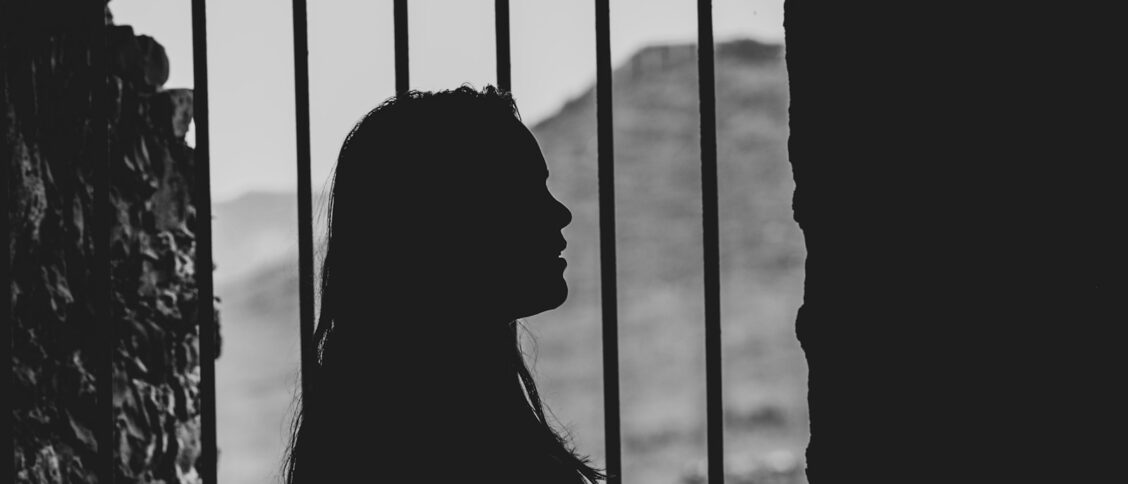
When we talk about the criminal justice system and mass imprisonment, the conversation is usually dominated by numbers about male prisoners. Men make up roughly 95% of the UK prison population, which creates a perception that the problem is primarily a male one. But if you look at the numbers for women specifically, what you see is a crisis that’s been largely overlooked, underfunded, and systematically ignored. Women in prison face mental health challenges at rates that dwarf the general population, and the system is profoundly unprepared to address them.
Women in prison are five times more likely than the general population to have mental health problems. Let that number sit for a moment. Five times. That’s not a marginal difference. That’s a fundamental disparity that speaks to something deeply wrong with how we’ve structured both the prison system and the pathways that lead women to prison in the first place. And the crisis doesn’t end with diagnosis. It’s compounded by inadequate treatment, by conditions that actively worsen mental health, and by a lack of understanding about what’s actually driving the mental health problems in the first place.
I’ve come to understand this issue intimately through my work with Inside Out Justice. We exist because we recognised that there’s a massive gap between the needs of people in prison and what’s actually being provided. For women specifically, that gap is enormous.
The Statistical Reality
Let’s look at the data directly because the numbers are stark. Forty-five percent of prisoners experience anxiety or depression. That’s roughly half. Not a small subset. Not a fringe issue. Nearly half of everyone in prison is dealing with significant mental health challenges. And this is substantially higher than the rates in the general population, where anxiety and depression affect roughly 15-20% of people.
But for women specifically, the numbers are even worse. Women prisoners have higher rates of mental health problems than male prisoners. They have higher rates of self-harm. They have higher rates of suicide attempts and, tragically, higher rates of completed suicides. The disparity suggests that the prison environment affects women differently—perhaps more severely—than it affects men. And yet the systems in place, the architecture of prisons, the support services available, have largely been designed for male prisoners.
One of the most striking statistics is the prevalence of self-harm among women in prison. Self-harm serves as both a symptom of underlying mental health problems and as a coping mechanism for unimaginable stress. When someone is harming themselves in prison, that’s a signal that the prison environment is unsustainable for them. That they’ve reached a point where they can’t cope with the psychological weight of imprisonment. And the standard response—increased security measures, segregation, punishment—often makes things worse, not better.
The data on trauma is equally concerning. The majority of women in prison have experienced significant trauma. Many are survivors of domestic violence. Many have experienced sexual abuse. Many come from backgrounds of profound instability and harm. The prison system was not designed with trauma-informed care in mind. It was designed with control and punishment in mind. So instead of healing, women in prison are re-traumatised by the very institution meant to house them.
The Trauma-to-Prison Pipeline
Understanding why women in prison have such high rates of mental health problems requires understanding the pathways that lead women to prison. It’s rarely a simple story of crime. Much more often, it’s a story of trauma, poverty, desperation, and a system that responds to human suffering with punishment.
Many women in prison are survivors of intimate partner violence. They may have committed offences because they were defending themselves against abusive partners. They may have been involved in crime because they were financially controlled by those partners. They may have ended up in prison because the justice system treated them as offenders rather than as survivors of abuse. And once in prison, they’re separated from any support network they might have had, placed in an environment of high stress and limited safety, and expected to function.
Other women in prison are there because of substance abuse issues. They’re addicted to drugs, often because they’ve been self-medicating for trauma or mental health problems, and the response to addiction has been imprisonment rather than treatment. We’re locking up people with addiction disorders in facilities that have minimal substance abuse treatment. We’re not treating the underlying problem. We’re just removing them from society and putting them in an environment that intensifies their distress.
The Corston Report, published in 2007, examined exactly these issues and made recommendations for how the criminal justice system should respond differently to women. Nearly two decades later, most of those recommendations remain unimplemented. We haven’t fundamentally changed how we think about women in prison. We haven’t restructured the system to be trauma-informed. We haven’t adequately funded mental health treatment. We’ve made only marginal adjustments around the edges.
The Prison Environment as Psychological Harm
Part of the reason mental health problems are so prevalent in prisons is that the prison environment itself is profoundly harmful to mental health. Even before you consider the existing problems people bring into prison, the experience of imprisonment causes psychological damage. Loss of autonomy, loss of privacy, loss of control over basic aspects of your life, forced separation from family and support networks, violence or threat of violence, overcrowding, boredom, lack of meaningful activity—these are all psychologically damaging. For someone who already has trauma history, the impact is magnified.
Women’s prisons in the UK have been experiencing significant overcrowding. Cells designed for one person are housing two. The female prison population has been growing despite representing a very small percentage of the overall prison population. This growth has strained the already-limited resources. Mental health services have become even more stretched. The safety of the prison has deteriorated. And the mental health problems that inevitably follow from this environment have gone unaddressed.
The physical conditions matter, but the psychological conditions matter even more. Women are separated from their children. Roughly 75% of women prisoners have dependent children, and imprisonment means family separation. That’s not just emotionally devastating. It’s traumatic. The guilt, the fear about what’s happening to your children, the helplessness of not being able to be there—these are severe psychological stressors. And the prison system makes minimal accommodation for the reality of motherhood. Visiting hours are often limited. Contact is heavily supervised. It’s difficult to maintain meaningful relationships with your children from inside.
Self-Harm and Suicide as Responses to Unbearable Conditions
When I talk about self-harm and suicide in prisons, I want to be very clear: these are not evidence of personal weakness or mental illness in a vacuum. These are responses to unbearable conditions. They’re signals that someone has reached a breaking point. They’re cries for help from a system that isn’t designed to listen. And when they happen, the standard response—segregation, security measures, closer monitoring—often makes things worse because it addresses the symptom without addressing the cause.
Women who self-harm in prison are often dealing with suicidal ideation. They’re in pain they can’t express. They’re trapped in a situation with no way out. Self-harm becomes a way to release that pressure, to feel something other than numbness or despair. It’s a temporary coping mechanism, and it usually indicates that the person needs serious mental health support.
What should happen is obvious: intensive mental health support, treatment for underlying trauma, counselling, medication if appropriate, and a pathway toward addressing the conditions that made self-harm necessary. What actually happens is much more punitive. The person is isolated. They’re treated as a behaviour management problem rather than a mental health crisis. The conditions become more restrictive. The psychological state worsens. The person is released back into gen pop still unaddressed, or they’re held in segregation, which itself causes psychological harm.
Suicide in prison is an ultimate expression of despair. It’s what happens when someone has decided that their situation is genuinely unbearable and has no confidence that anything will change. The fact that suicide rates in prison are higher than in the general population—and higher for women than for men—is an indictment of the system. We’re creating conditions where people prefer death to continuing to live in them.
The Systemic Failures
There are specific, identifiable systemic failures that contribute to the mental health crisis among women prisoners. First, there’s the fundamental lack of mental health resources. Prisons are chronically underfunded. Mental health services within prisons are even more underfunded. There aren’t enough psychiatrists, psychologists, or counsellors to meet the need. Someone with serious mental illness in prison might be lucky to see a mental health professional once a month, if that. Someone with trauma history, with addiction issues, with suicidal ideation, is often on a waiting list.
Second, the system is not trauma-informed. Prisons were designed with the assumption that people needed to be controlled, restrained, and punished. They weren’t designed with the understanding that many of the people in them have experienced significant trauma and need approaches that acknowledge that. So the standard response to difficult behaviour is physical restraint, segregation, punishment—exactly the things that re-traumatise someone with trauma history.
Third, there’s inadequate attention to the specific needs of women. Women’s prisons are much smaller than men’s prisons. The female prison population is distributed across fewer facilities. This means there’s less specialisation. You don’t get units dedicated to women with specific needs—trauma survivors, women with eating disorders, women with serious mental illness. Everyone’s mixed together, and the system tries to apply one-size-fits-all solutions.
Fourth, there’s the reality of the sentencing system and parole. Women often receive sentences that are disproportionate to their offences, particularly when their offence was related to defending themselves against abuse or was driven by desperation rather than intent to harm. Once sentenced, the path to release is unclear. There’s no guarantee that serving your time will lead to freedom. You might be denied parole despite meeting the conditions. This uncertainty is psychologically damaging. You have no control over the timeline of your release. You can’t make plans. You can’t know when you’ll see your children again.
The Inside Out Justice Perspective
I founded Inside Out Justice because I became convinced that the standard approaches to criminal justice are fundamentally broken, particularly for the most vulnerable people in the system. The focus on punishment rather than rehabilitation, on incapacitation rather than treatment, on control rather than human dignity—these approaches don’t work. They don’t reduce reoffending. They don’t make society safer. They don’t rehabilitate people. What they do is compound existing trauma, destabilise people who are already unstable, and virtually guarantee that when they’re released, they’ll be worse off than when they went in.
For women in prison specifically, there’s an additional layer. Women’s sentences are often driven by moral judgement rather than actual danger. A woman who commits a crime is judged more harshly morally than a man who commits the same crime. She’s seen as having violated her role, as having failed in some fundamental way. This colours how she’s treated in the system. And when she’s released, this same stigma follows her. She’s more damaged, more isolated, more likely to end up back in prison.
What Inside Out Justice is focused on is changing how we think about and respond to people in prison, particularly women. This includes advocating for better mental health services, for trauma-informed approaches, for restorative justice alternatives where appropriate, and for fundamental reform of the system. It means supporting the women who are currently in prison and working to change the conditions they’re experiencing. It means pushing for policy changes that would reduce imprisonment and increase access to community-based support.
It also means telling the stories of women in prison. Because one of the reasons these issues remain ignored is that women in prison are invisible. They don’t get media attention. They’re a small percentage of the prison population. They’re easy to forget about. By telling their stories, by making their suffering visible, we can create pressure for change.
What Actually Needs to Happen
Change will require moving away from mass imprisonment as a default response to crime. It will require investment in community-based support, mental health services, addiction treatment, and programmes that address the root causes of crime rather than just punishing it. For women specifically, it will require an understanding that many of them are in prison as a result of their own victimisation and that a trauma-informed, supportive approach makes far more sense than a punitive one.
We need dedicated mental health facilities within prisons, with adequate staffing and resources. We need screening for trauma and systematic trauma-informed approaches. We need support for women dealing with substance abuse, comprehensive programming, and genuine education and employment opportunities. We need to preserve family bonds by making visiting more accessible, by allowing contact with children, and by providing family-based support programming.
We need to reconsider sentences, particularly for women whose crimes are related to self-defence or survival. We need mechanisms for review and potential sentence reduction for people who’ve completed rehabilitation programming. We need restorative justice approaches that address harm done and allow for genuine healing rather than just punishment. We need to stop using solitary confinement as a behaviour management tool, particularly for people with mental health problems.
And we need to change the narrative. We need to stop talking about prison as a place of punishment and start talking about it as an opportunity for rehabilitation and healing. That’s not soft-headed idealism. It’s practical. Countries that have moved in this direction—that have focused on rehabilitation, treatment, and addressing underlying causes rather than on punishment—have better outcomes. Lower reoffending rates. More successful reintegration. Safer communities.
The Case for Why This Matters
I recognise that prison reform, particularly reform focused on women, isn’t high on most people’s list of political priorities. Women in prison don’t have a powerful lobby. They don’t have politicians fighting for them. And there’s a general sense that if you’re in prison, perhaps you don’t deserve a lot of sympathy. But I’d argue that this is exactly the wrong way to think about it.
First, there’s the straightforward human rights argument. We have a responsibility to treat all people with basic dignity and humanity. That includes people in prison. And that means providing adequate mental health care, safe conditions, and opportunities for rehabilitation. It’s a basic ethical obligation.
Second, there’s the practical argument. Most people in prison will eventually be released. If we release people who have been psychologically damaged, who have untreated mental illness, who have no support network, who have no hope—then we shouldn’t be surprised when they reoffend. We’re virtually guaranteeing it. If instead we use imprisonment as an opportunity for treatment and rehabilitation, we can actually reduce reoffending and make communities safer.
Third, there’s the economic argument. The cost of imprisoning someone is substantial. The cost of providing comprehensive mental health treatment and rehabilitation in prison is a fraction of the cost of imprisonment. And the downstream costs avoided by reducing reoffending are enormous. It’s cheaper to provide adequate mental health care than it is to cycle people through the criminal justice system repeatedly.
Fourth, there’s an argument about who we are as a society. If we’re willing to accept that women in prison are experiencing a five-fold increase in mental health problems, that nearly half of all prisoners are experiencing anxiety or depression, that self-harm and suicide are routine, and we’re not willing to change that—then what does that say about us?
Moving Forward
Change is possible. There are countries and jurisdictions that have moved away from mass imprisonment, that have focused on rehabilitation and treatment, and that have better outcomes as a result. The Netherlands, for example, has been closing prisons because they’ve reduced imprisonment rates through focusing on community-based support. We have examples to follow. We know what works.
What’s required is political will and public pressure. It requires visibility. It requires people understanding the reality of what’s happening in prisons and deciding that it’s unacceptable. It requires people like you reading this and caring enough to demand change.
If you want to help, there are things you can do. You can support organisations like Inside Out Justice that are working on these issues. You can educate yourself and others about the reality of imprisonment, particularly for women. You can advocate for policy change. You can volunteer your time and skills. You can support women who’ve been released from prison as they try to rebuild their lives.
The mental health crisis among women in prison is real and it’s severe. It’s also entirely solvable if we’re willing to make the investment and make the changes. What it requires is seeing women in prison not as defined by their worst moment—the crime that led to their imprisonment—but as full human beings deserving of dignity and the opportunity to heal and change. That’s where I believe the answer lies.
Discover more from Scott Dylan
Subscribe to get the latest posts sent to your email.
Scott Dylan is Dublin based British entrepreneur, investor, and mental health advocate. He is the Founder of NexaTech Ventures, a venture capital firm with a £100 million fund supporting AI and technology startups across Europe and beyond. With over two decades of experience in business growth, turnaround, and digital innovation, Scott has helped transform and invest in companies spanning technology, retail, logistics, and creative industries.
Beyond business, Scott is a passionate campaigner for mental health awareness and prison reform, drawing from personal experience to advocate for compassion, fairness, and systemic change. His writing explores entrepreneurship, AI, leadership, and the human stories behind success and recovery.
Scott Dylan is Dublin based British entrepreneur, investor, and mental health advocate. He is the Founder of NexaTech Ventures, a venture capital firm with a £100 million fund supporting AI and technology startups across Europe and beyond. With over two decades of experience in business growth, turnaround, and digital innovation, Scott has helped transform and invest in companies spanning technology, retail, logistics, and creative industries.
Beyond business, Scott is a passionate campaigner for mental health awareness and prison reform, drawing from personal experience to advocate for compassion, fairness, and systemic change. His writing explores entrepreneurship, AI, leadership, and the human stories behind success and recovery.