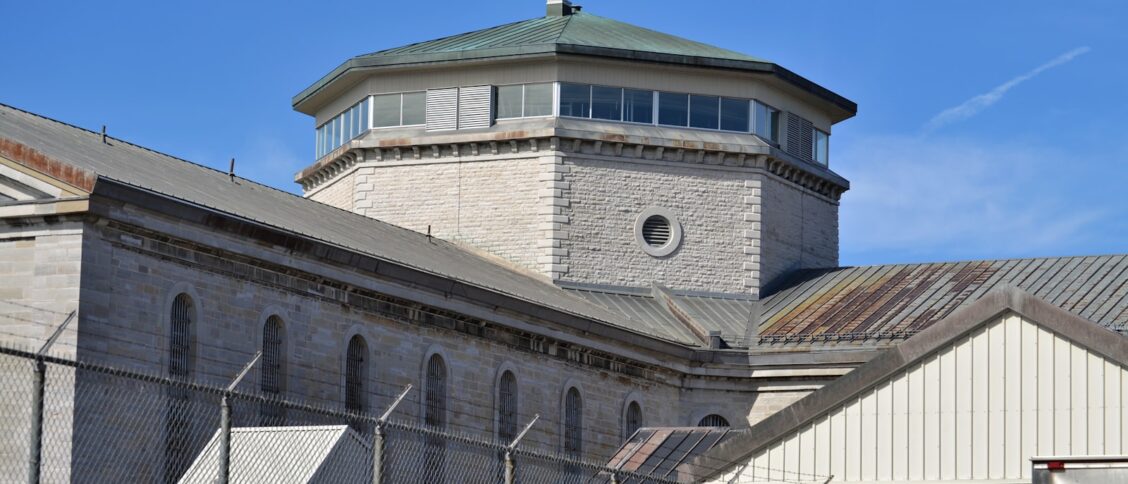
Seventy-two per cent of prisons in England and Wales are overcrowded. Let that sink in. Nearly three quarters of our prison estate is operating beyond its designed capacity. Right now, as you read this, more than 21,600 people are being held in accommodation unsuitable for them. They’re sleeping three to a cell designed for one occupant. They’re sharing toilet facilities that provide no privacy or dignity. They’re existing in conditions that would breach housing standards if applied to animals.
I’ve built my career around identifying problems that nobody else wants to touch. Prison reform sits in that category. It’s unglamorous. Prisoners don’t vote in significant numbers. There’s no political upside to appearing soft on crime. The public imagination has been shaped by decades of ‘tough on crime’ rhetoric, and there’s an assumption that people in prison deserve whatever conditions they experience.
That assumption is wrong, and the evidence is overwhelming. The numbers coming out of our prison system right now are genuinely alarming. More alarming still is how little public attention they receive.
Understanding the Scale of Overcrowding
At the start of 2026, the prison population in England and Wales stood at record levels. With 88,000 prisoners and a Certified Normal Accommodation (CNA) of just 82,000 places—the number of spaces considered suitable for holding prisoners—the system was operating well beyond its intended capacity. That’s not a minor statistical anomaly—it’s a system under severe strain. These figures exclude people on remand awaiting trial, which adds further pressure.
The 21,600 people in unsuitable accommodation aren’t just statistics. They’re people awaiting trial who haven’t been convicted of anything, sharing cells designed for one person. They’re people serving sentences in conditions that breach their basic dignity. They’re individuals with mental health problems, addiction issues, and trauma histories being warehoused rather than managed.
Overcrowding creates a cascade of problems. Prison staff are exhausted and demoralised. Violence increases. Self-harm increases. Access to programmes and education diminishes because there’s no space to run them. Healthcare becomes impossible to deliver properly—imagine trying to manage someone with serious mental illness in a cell shared with two other people. The prison system stops functioning as an institution intended to rehabilitate or even safely contain people, and becomes instead a space where human beings are merely stacked.
The Prisoners Released in Error: A Failure of Basic Competence
Between April 2024 and March 2025, England’s prisons released 262 prisoners in error before they had completed their sentences. That number alone tells you something about the state of the system. This wasn’t a complex intelligence operation where sophisticated countermeasures failed. This was people being let out of prison when they shouldn’t have been, because the system tracking prisoner releases couldn’t function properly under the strain of overcrowding.
The scale of the error is shocking—a 128 per cent increase on the previous year. Prison Service leadership described it as a computer glitch caused by outdated systems struggling under peak capacity. Let me translate that: the system broke because we’ve been underfunding and understaffing prisons for so long that basic record-keeping became impossible when we finally exceeded the system’s breaking point.
This represents a profound failure of institutional competence. Prisons are fundamentally about control, security, and accountability. If you can’t reliably track who’s supposed to be there and who isn’t, the institution has failed at its most basic function. These weren’t dangerous prisoners released through sophisticated schemes—they were released through sheer administrative incompetence. Some were low-level offenders near the end of their sentences, but the principle is the same. The system cannot function reliably under these conditions.
What genuinely troubles me about this incident is the lack of consequence. There’s been an inquiry, recommendations have been made, the Prison Service will implement IT upgrades. But nobody lost their job. Nobody faced serious accountability. In any other industry, releasing 262 people who should be detained would result in investigations, prosecutions, and resignations. In prison administration, it’s treated as an unfortunate operational glitch to be fixed with better software.
The Government Response: 14,000 Additional Places by 2031
The Government has responded to the overcrowding crisis with a commitment to create 14,000 additional prison places by 2031. That’s the headline response—more beds. Before we assess whether this addresses the problem, we need to understand what problem we’re actually trying to solve.
Adding 14,000 places would bring the prison estate to 96,000 capacity. On current trajectory of prison population, this might solve the overcrowding problem for a few years. But it assumes the prison population remains relatively stable. Every political promise to expand prisons has been followed by a period of stable, even declining populations—for a few years. Then something shifts, crime concerns rise, sentencing policies change, and the population grows again. We end up in the same situation: new prisons built at enormous public expense, then overcrowded within a decade.
Building new prisons costs money. Lots of it. Current estimates put the total programme cost at between £9.4 billion and £10.1 billion for 14,000 places—roughly £670,000 to £720,000 per prison place. That works out at close to £700 million per 1,000-place facility. Add operational costs—staffing, healthcare, utilities—and we’re looking at well over a billion pounds annually just to run the new facilities. That’s public money that could be invested in crime prevention, mental health, addiction treatment, or education. It’s public money committed to containment rather than resolution.
The Sentencing Act 2026: Can We Reduce Prison Demand?
In parallel with the prison expansion announcement, the Sentencing Act 2026 was introduced with objectives to reduce prison demand by 7,500 places. The logic is sound: instead of building our way out of overcrowding, reduce the number of people in prison in the first place. This could be achieved through various mechanisms—earlier release for lower-risk offenders, expansion of community sentences, diversion from prosecution for certain offences, investment in rehabilitation to reduce reoffending.
The problem, inevitably, is political. Getting tougher on crime plays well with voters. Being seen as going soft on crime is electoral poison. Judges and magistrates operate within a culture where custodial sentences are the default response to serious offences. Prosecutors are incentivised to pursue custody. Nobody wins votes by saying we should release prisoners earlier or sentence fewer people to prison.
The Sentencing Act 2026 represents a genuine attempt to shift this dynamic. The early indications suggest modest success—some categories of offence are seeing lower sentencing recommendations, some repeat offenders are being diverted to rehabilitation programmes. But the structural incentives remain. It will take consistent, patient effort to reshape a criminal justice culture that has been punitive for decades.
Historical Context: How We Got Here
England’s prison population hasn’t always been at these levels. In 1991, the prison population was 45,000. Over the course of the 1990s and 2000s, it climbed steadily. Crime rates were generally stable or falling, but prison population kept rising. Why? Multiple factors contributed: longer sentences for serious crime, mandatory minimum sentences introduced by legislation, reduced use of non-custodial alternatives, a shift in judicial culture toward punishment over rehabilitation, increasingly harsh drug sentencing policies.
With each successive government, from both parties, there was a tendency toward harsher policies. Political capital lay in appearing tough. The voices for reform were marginal and easily dismissed. Prisoner advocacy groups lack political influence. Society has limited sympathy for people in prison, particularly for those convicted of serious crimes.
This is how systems become dysfunctional. No single decision caused the current crisis. It resulted from accumulated choices—each individually justifiable or politically necessary, collectively creating a system that cannot function.
European Comparisons: We’re Not Alone, But We’re Worse
European countries face similar pressures on prison systems. Population growth, crime concerns, political demands for action all create pressure toward increasing imprisonment. But the UK’s approach to imprisonment is notably punitive compared with other developed democracies.
Germany’s prison population is lower than the UK’s despite having a larger overall population. Scandinavian countries achieve remarkably low reoffending rates with approaches that emphasise rehabilitation and humane conditions. France, Spain, and others have faced similar overcrowding crises but have generally responded with combination approaches: prison expansion in some cases, but also serious investment in alternatives to custody, rehabilitation programmes, and reduced sentencing for lower-risk offenders.
The evidence from other countries is clear: investment in rehabilitation and community-based interventions produces better outcomes than pure incapacitation. Countries with less punitive systems have lower crime rates and lower reoffending. Yet the political instinct in the UK remains toward punishment.
The Inside Out Justice Perspective
I founded Inside Out Justice because I became convinced that prison reform represents one of the defining justice issues of our time. The system is cruel, expensive, and ineffective at its stated purpose of reducing crime. The overcrowding crisis is a symptom of deeper problems.
When I visit prisons and speak with people who are imprisoned, what strikes me most is the humanity of the situation. These are people with complex lives, trauma histories, addiction problems, and limited opportunities. Many of them have mental health conditions that should be treated in healthcare facilities rather than prisons. Many are serving sentences that are disproportionate to their offences. Many are remanded in custody awaiting trial for months, destroying their employment and housing in the process.
Prison as currently operated in England and Wales is a mechanism of social control that falls disproportionately on poor, marginalised, and minority communities. It functions as a substitute for adequate social services, mental healthcare, addiction treatment, and education. We imprison people for problems that could be more humanely and effectively addressed through other means.
The overcrowding crisis is a wake-up call. When you cannot safely detain people because you’ve exceeded capacity, when you’re releasing the wrong prisoners because your systems have failed, when you’re holding innocent people in appalling conditions while they await trial, you have a system in crisis. That crisis is an opportunity. It creates political space to ask fundamental questions: Why do we imprison at such high rates? What are we actually trying to achieve with prison? Are there better ways to reduce crime and manage offenders?
What Genuinely Effective Response Would Look Like
An honest assessment of the prison overcrowding crisis suggests we need a multi-pronged approach. Some new prison capacity is probably necessary—not 14,000 places, but sufficient capacity to eliminate the current dangerous overcrowding whilst we address the deeper issues. But prison expansion cannot be the primary response.
We need serious investment in alternatives to custody: community sentences, restorative justice, drug courts, mental health courts. We need judges and magistrates to be actively incentivised toward non-custodial options. We need remand reform—people awaiting trial should rarely be held in custody given the presumption of innocence. We need radical shortening of sentences for lower-level offences. We need mandatory release programmes for people approaching the end of their sentences so they can rebuild lives outside.
We need to treat mental illness as a mental health problem, not a criminal justice problem. If someone is imprisoned primarily because of psychiatric illness, they belong in a hospital with treatment, not in a prison cell. We need addiction support that works, provided in custody and in the community.
We need to stop using prison as a substitute for everything else the state should be providing. Education for young people at risk of offending. Job training. Housing support. Family services. Healthcare. We spend billions on prisons and millions on prevention. That ratio is upside down.
Most fundamentally, we need to shift the culture. We need to stop treating imprisonment as punishment and start treating it as a mechanism of last resort for genuinely dangerous people who cannot be managed safely in the community. We need to recognise that incapacitation is sometimes necessary, but it’s extraordinarily expensive and often ineffective at reducing crime. We need to become a country that takes justice seriously—which means taking rehabilitation seriously, treating offenders with dignity, and seeking to reduce crime rather than simply exacting retribution.
The Numbers That Should Drive Change
Seventy-two per cent overcrowding. 21,600 people in unsuitable conditions. 262 prisoners released in error. These aren’t abstract figures. They represent thousands of people right now, today, living in degrading conditions. They represent children with parents in custody. They represent staff working in impossible circumstances. They represent a system that has broken.
This is the moment when we can choose to respond with more of the same—more prison places, more enforcement—or we can choose to build something different. It will take political courage. It will take sustained effort. It will take accepting that our approaches of the last three decades have not worked.
But the alternative—continuing to overcrowd prisons whilst doing nothing about the underlying drivers of imprisonment—is no longer viable. The system cannot hold. We have a choice: fix it deliberately, or watch it break. Those are the only options now.
Discover more from Scott Dylan
Subscribe to get the latest posts sent to your email.
Scott Dylan is Dublin based British entrepreneur, investor, and mental health advocate. He is the Founder of NexaTech Ventures, a venture capital firm with a £100 million fund supporting AI and technology startups across Europe and beyond. With over two decades of experience in business growth, turnaround, and digital innovation, Scott has helped transform and invest in companies spanning technology, retail, logistics, and creative industries.
Beyond business, Scott is a passionate campaigner for mental health awareness and prison reform, drawing from personal experience to advocate for compassion, fairness, and systemic change. His writing explores entrepreneurship, AI, leadership, and the human stories behind success and recovery.
Scott Dylan is Dublin based British entrepreneur, investor, and mental health advocate. He is the Founder of NexaTech Ventures, a venture capital firm with a £100 million fund supporting AI and technology startups across Europe and beyond. With over two decades of experience in business growth, turnaround, and digital innovation, Scott has helped transform and invest in companies spanning technology, retail, logistics, and creative industries.
Beyond business, Scott is a passionate campaigner for mental health awareness and prison reform, drawing from personal experience to advocate for compassion, fairness, and systemic change. His writing explores entrepreneurship, AI, leadership, and the human stories behind success and recovery.