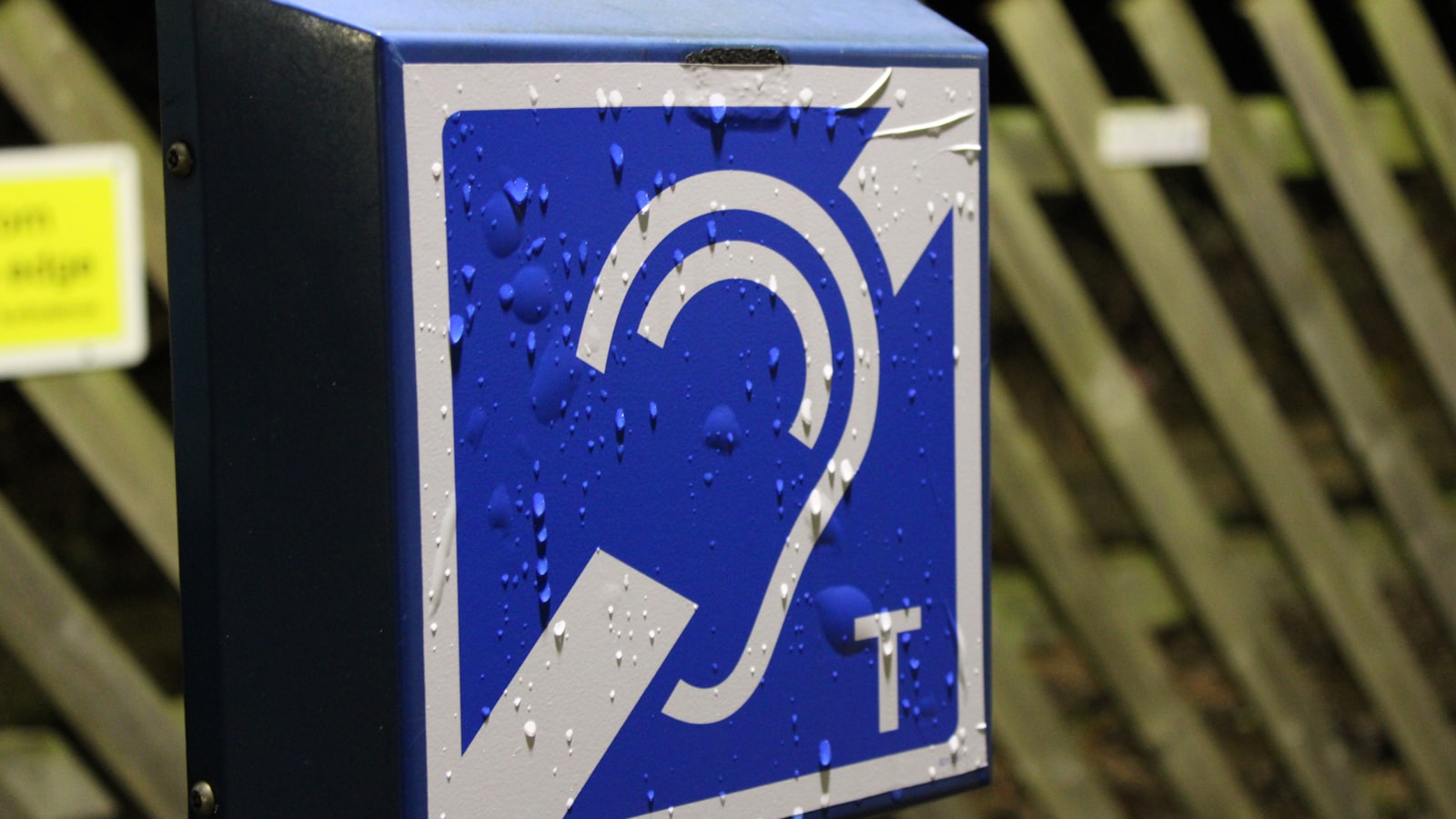
Technology has a unique capacity to either amplify existing inequalities or transform them. For disabled people, historically, technology has often done both simultaneously—creating wonderful opportunities for some whilst remaining entirely inaccessible to others. But artificial intelligence introduces new possibilities. AI systems can be designed to accommodate human diversity, to provide customised support for different needs, to remove barriers that have seemed immovable for decades. When designed properly, AI doesn’t just make existing systems more accessible—it fundamentally reimagines what’s possible for people with disabilities. This isn’t science fiction. It’s happening right now. But the potential remains woefully underexplored and underinvested. The technology industry has a genuine opportunity to build accessibility into AI from the start rather than retrofitting it later, to create tools that level the playing field for disabled people, and to help narrow the shameful disability employment gap that persists across the UK. Whether we take that opportunity depends on whether we recognise disabled people as equal stakeholders whose needs should drive AI design, or whether we continue to treat accessibility as an afterthought.
The Disability Employment Gap: The Problem We Need to Solve
Employment is one of the most powerful determinants of quality of life. Work provides income, purpose, social connection, and contribution to something beyond oneself. Yet disabled people in the UK face extraordinary barriers to employment. The Office for National Statistics reports that approximately 51% of working-age disabled people are employed, compared to 81% of non-disabled people. This 30-percentage-point employment gap represents millions of people excluded from the benefits of work and economic independence. The reasons for this gap are multiple. Many employers hold discriminatory attitudes about disabled people’s capabilities. Workplaces are often physically inaccessible or fail to provide reasonable adjustments. Technology used in workplaces isn’t designed for accessibility. The recruitment process itself is often inaccessible to disabled people. Educational pathways to many professions remain difficult for disabled people to navigate. Rather than a single barrier that could be addressed through a single intervention, the employment gap reflects systematic exclusion across multiple domains. This is where AI has genuine transformative potential.
Screen Readers: Making the Digital World Accessible
Screen readers represent one of the longest-established examples of assistive technology, predating modern AI by decades. These tools convert digital text into spoken audio, allowing blind and low-vision users to access computers and digital content. The experience of using a screen reader is fundamentally different from sighted use of a computer—rather than visually scanning a page, screen reader users navigate sequentially through content that’s read aloud. This difference means that content not designed with screen reader compatibility in mind becomes completely inaccessible. Tragically, many modern websites and applications still aren’t designed with screen reader compatibility as a priority, requiring disabled users to navigate around broken accessibility. However, AI is beginning to improve screen reader functionality. Machine learning can identify images and generate descriptions automatically, making image-based content accessible without requiring website designers to manually write alternative text. AI can understand context and provide more natural and useful descriptions of what appears on screen. AI can learn individual users’ preferences and adapt how information is presented through screen readers, providing customised experiences rather than one-size-fits-all approaches. These improvements aren’t simply nice-to-have refinements—they’re the difference between digital content being genuinely accessible or frustratingly inaccessible.
Speech Recognition: Replacing Traditional Input Methods
Traditional computer input relies on keyboards and mice—tools that are excellent for many people but impossible or painful for others. People with motor impairments, repetitive strain injuries, arthritis, or paralysis find keyboard and mouse input difficult or impossible. Speech recognition technology, dramatically improved by recent advances in AI, offers an alternative. Modern speech recognition systems can understand natural speech patterns with remarkable accuracy, adapt to individual accents and speech patterns, and process input in real time. This means that disabled people with motor impairments can control computers, write documents, navigate interfaces, and perform complex computational tasks using only their voice. This represents a genuinely transformative change in accessibility. Someone who previously couldn’t use standard computer input can now work with digital tools effectively. Someone who was excluded from professions requiring typing can now perform equivalent work using speech input. The technology isn’t perfect—speech recognition still struggles with some accents and with noisy environments—but it’s good enough to be genuinely transformative for many users.
Cognitive Accessibility: Supporting Diverse Thinking
Cognitive accessibility remains one of the most neglected areas of accessibility work. We have good frameworks for physical accessibility—ramps, accessible toilets, proper signage. We have reasonable frameworks for sensory accessibility—screen readers, captions. But cognitive accessibility—making systems usable for people with cognitive disabilities, learning disabilities, autism, ADHD, or other neurological differences—remains poorly developed. This is a tremendous shame because the opportunity is enormous. AI can help design interfaces that adapt to cognitive load. Rather than presenting information in standard formats that may overwhelm some users, AI can identify when cognitive load is becoming problematic and simplify information presentation. AI can provide real-time assistance with working memory—helping people keep track of tasks, remember important information, and structure complex work. AI can provide decision support for people who struggle with executive function, breaking large tasks into manageable steps and providing guidance. AI can detect when someone is becoming confused or overwhelmed and offer support or simplification. These tools could be genuinely transformative for people with cognitive disabilities, potentially enabling employment that currently feels impossible. Yet investment in cognitive accessibility remains minimal.
Predictive Text and Adaptive Communication
People with motor impairments often rely on communication devices—systems that allow them to compose words by selecting letters from a keyboard and hear the resulting message read aloud. These devices are vital but slow—composing a single sentence can take minutes. AI is beginning to transform this experience through predictive text technology. Machine learning can predict what word a person is likely to say next based on context, allowing them to select entire words rather than individual letters. Even better, AI can learn individual communication patterns and personalise prediction to that person’s typical word choices, resulting in faster and more natural communication. Some systems can even recognise when someone is trying to express common thoughts and offer full phrases rather than requiring individual word selection. For someone who communicates through an augmentative and alternative communication device, this improvement from minutes to accomplish communication to seconds is genuinely revolutionary—it restores the ability to communicate naturally and participate in real-time conversation.
UK employment law requires employers to make ‘reasonable adjustments’ to accommodate disabled employees. This framework has been valuable for promoting workplace accessibility, but it’s reactive and limited. Disabled employees have to request adjustments, employers must decide whether adjustments are ‘reasonable,’ and the result is often a compromise that works but could be better. AI offers a different approach—proactive accessibility embedded into how work is performed. AI-powered tools can automatically adjust how information is presented based on user needs. AI can manage scheduling to accommodate fatigue or medical appointments. AI can handle routine administrative tasks that might be energy-intensive or difficult for some disabled workers. AI can provide real-time support for tasks someone finds challenging. AI can predict when someone might be becoming overwhelmed and suggest support. This isn’t about lowering standards or allowing disabled workers to underperform—it’s about creating circumstances where disabled workers can perform at their best by having tools tailored to how they work. The result is better work, not inferior work, because the tools are optimised for actual human diversity rather than forcing all humans into one mould.
The Equality Act 2010: Legal Framework for Accessibility
The Equality Act 2010 requires that digital services be accessible to disabled people. This is the legal framework within which UK digital accessibility operates. The Act specifies that service providers must not discriminate against disabled people, must make reasonable adjustments, and in the context of digital services, must ensure accessibility. However, enforcement remains inconsistent, and many organisations haven’t caught up with accessibility requirements. Moreover, the Act’s focus on ‘reasonable adjustments’ rather than universal design means that accessibility is often treated as a compliance burden rather than a fundamental design principle. AI offers an opportunity to move beyond ‘reasonable adjustments’ towards universal design—creating systems that work well for everyone from the start. When AI systems are designed with accessibility as a core principle, separate adjustments become unnecessary. The system is simply more flexible and better suited to actual human diversity.
Real-World Applications: What’s Already Working
Several real-world applications demonstrate AI’s potential for accessibility. Live captioning systems powered by AI now enable Deaf and hard-of-hearing people to participate fully in meetings, conferences, and classrooms. The improvement in accuracy and speed has been remarkable—what five years ago required human captioners and was prohibitively expensive can now be done automatically in real time. Image recognition powered by AI automatically generates alt-text for images, making visual content accessible to screen reader users without requiring designers to manually write descriptions. Language processing AI can simplify complex text, rewriting passages in simpler language for people who struggle with complex syntax. AI-powered tools can analyse documents and identify accessibility issues, guiding designers towards more accessible choices. AI customer service systems can be designed with accessibility features that human customer service often lacks—patience, customisable communication speed, ability to repeat information without judgement. These applications prove the concept. What’s needed is expansion and investment.
Designing With Disabled People, Not For Them
One of the most consistent findings in accessibility work is that products designed without involving disabled people often miss the mark dramatically. Designers and engineers, however well-intentioned, make assumptions about how disabled people experience the world that often prove wrong. The principle of ‘Nothing About Us Without Us’ reflects the reality that disabled people have expertise about their own experiences and needs that outsiders simply don’t possess. This principle is crucial for AI accessibility. If AI systems are designed to improve accessibility, they must be designed with disabled people actively shaping the design process. This means hiring disabled people in design and engineering roles. It means including disabled people in user testing throughout development. It means building accessibility into core product design rather than adding it as an afterthought. It means respecting disabled people’s expertise about their own needs. Crucially, it means not assuming that all disabled people have the same needs—disability is incredibly diverse, and the needs of someone with a mobility impairment are fundamentally different from the needs of someone with autism or someone who’s Deaf. Good accessibility work involves engaging with that diversity.
The Technology Industry’s Responsibility
The technology industry has a responsibility to prioritise accessibility in AI development. This isn’t purely altruistic—accessible technology is often better technology that benefits everyone. Captions created for Deaf people are helpful for hearing people in noisy environments. Voice control designed for people with motor impairments is convenient for anyone. Simple, clear language developed for cognitive accessibility is better for non-native speakers. But beyond these co-benefits, the industry has a moral responsibility to ensure that AI benefits disabled people rather than further excluding them. This responsibility requires genuine commitment. It means allocating resources to accessibility research. It means building accessibility into development timelines rather than treating it as optional. It means hiring disabled people and genuinely valuing their expertise. It means being willing to sometimes move slower or do things differently to ensure accessibility. None of this is easy or free. But it’s necessary if AI is going to be genuinely transformative for disabled people.
Investment in Accessibility Research
Despite AI’s transformative potential for accessibility, research in this area remains woefully underfunded. Venture capital, which funds most AI development in the private sector, is typically uninterested in accessibility work. Accessibility doesn’t generate the venture returns that consumer-facing AI products do. Accessibility is primarily benefiting people with disabilities, a market that venture investors have historically treated with indifference. This means that most AI accessibility development comes from universities, charities, and government research, all of which operate with limited budgets. The result is that accessibility AI lags far behind other AI applications in capability. Someone using standard AI-powered writing tools has access to much more sophisticated technology than someone using AI-powered accessibility tools. This seems backwards. If anything, investment should be skewed towards accessibility because the marginal benefit of improved accessibility for disabled people exceeds the marginal benefit of marginal improvements to non-accessible technology.
Inclusive Education: Building Skills From the Start
Educational inclusion of disabled students is foundational to employment inclusion. When disabled students are excluded from mainstream education, or included but unsupported, they lack the skills and credentials necessary for employment. AI can contribute to more inclusive education. AI-powered tutoring systems can adapt to individual learning styles and paces, supporting both disabled and non-disabled students. AI-powered accessibility tools can enable disabled students to participate fully in mainstream classrooms. AI-powered assessment tools can assess understanding without bias based on disability. The critical requirement is that schools and universities approach AI with accessibility in mind from the start. Rather than developing inclusive education, developing accessibility retrofits, and then fitting AI on top, schools should be asking: How can AI help us create genuinely inclusive education? How can we design AI tools that serve the full diversity of our student population?
Addressing Digital Exclusion
One significant challenge in applying AI to accessibility is that some of the most marginalised disabled people are also most likely to be digitally excluded. People living in poverty may not have reliable internet access. Older disabled people may lack familiarity with digital technology. Some disabled people may lack access to the devices necessary to use AI-powered accessibility tools. This means that building advanced AI accessibility tools doesn’t automatically solve accessibility problems if the people who most need them lack access to the underlying technology. Addressing this requires public investment in digital infrastructure and digital literacy. It requires ensuring that accessibility tools are available not just to affluent early adopters but to disabled people across all economic circumstances. This is fundamentally a question of justice and equity. If we’re going to invest in AI accessibility, we need to ensure that the benefits are widely distributed rather than only available to disabled people who happen to have resources and digital access.
Autonomous Systems and Accessibility
Emerging autonomous systems—delivery robots, autonomous vehicles, AI-powered home systems—will need to be designed with accessibility in mind from the start or they’ll further exclude disabled people. Consider autonomous vehicles: if designed properly, they could provide mobility to people who can’t drive due to disability. But if designed without accessibility input, they might prove inaccessible to disabled passengers, creating new forms of exclusion. Consider home automation systems: if designed with accessibility in mind, they could enable independent living for people who otherwise would require significant support. But if designed without accessibility consideration, they become another technology that doesn’t work for disabled people. These emerging systems represent a crucial opportunity to get accessibility right from the start rather than discovering problems later. The technology industry should be actively engaging with disabled people in designing these systems, treating accessibility as a core requirement rather than an optional feature.
The Economic Case for AI Accessibility
Beyond the moral argument for AI accessibility, there’s a strong economic case. The disability employment gap costs the UK economy substantially in lost productivity and increased public support costs. If AI accessibility tools could enable even a fraction of unemployed disabled people to enter the workforce, the economic benefit would be enormous. Additionally, disabled people represent a significant consumer market—over 20% of the UK population identifies as disabled. Yet technology is often designed without them in mind, missing opportunities to serve a substantial market segment. Companies that develop genuinely accessible products position themselves to serve this growing market. There’s also the broader economic value of increased diversity in the technology workforce. The current tech industry skews heavily towards young, non-disabled men. Disabled people bring different perspectives and approaches to problem-solving. An industry that actively recruited disabled people and accommodated disabled workers would be more innovative, not less.
Barriers to AI Accessibility Implementation
Despite the potential, multiple barriers prevent full implementation of AI accessibility. Firstly, there’s the knowledge gap—many technology companies simply don’t understand disability or accessibility, so they don’t prioritise it. Secondly, there’s the market incentive gap—venture capital rewards consumer-facing AI products more than accessibility tools, so less investment flows to accessibility. Thirdly, there’s the expertise gap—the technology industry lacks sufficient disabled people in positions to influence product development. Fourthly, there’s the timeframe gap—accessibility development takes time, and tech companies under pressure for rapid product releases often skip accessibility. Finally, there’s the regulatory gap—without sufficient legal requirements, companies have limited incentive to prioritise accessibility. Addressing these barriers requires action at multiple levels: industry needs to prioritise accessibility, investors need to fund accessibility research, education needs to train accessibility specialists, regulation needs to require accessibility, and crucially, disabled people need to be centred in these conversations.
Global Standards and Consistency
AI accessibility benefits from global standards and consistency. When accessibility guidelines and standards are fragmented across countries and regions, companies must undertake different work to serve different markets, which disincentivises comprehensive accessibility. When clear, consistent global standards exist, serving an accessible product globally is straightforward. The Web Content Accessibility Guidelines, developed internationally, represent a successful model for establishing clear, technical accessibility standards. Similar global standards for AI accessibility could help drive consistent, comprehensive accessible AI development. This requires international collaboration and agreement that accessibility is a priority. It requires disabled people from different countries and cultures being involved in standard-setting. It requires recognition that accessibility needs vary somewhat across contexts but that the underlying principle—that technology should be usable by people with diverse disabilities—is universal.
Looking Forward: The Future of Accessible AI
The future of AI in accessibility is genuinely exciting if we choose to prioritise it. Imagine AI accessibility tools that understand not just individual disabilities but the intersection of multiple disabilities, providing customised support for people with complex needs. Imagine workplaces where AI handles the routine, energy-intensive tasks that are often most difficult for disabled workers, freeing human attention for the work that plays to disabled people’s strengths. Imagine education systems where AI adapts in real time to students’ needs, supporting both disabled and non-disabled students to learn at their own pace. Imagine autonomous systems that enable disabled people to live with greater independence and control. All of this is technically feasible. What’s required is commitment from the technology industry, investment from both private and public sectors, inclusion of disabled people in design and development, and political will to require accessibility as a standard rather than an optional luxury.
A Call to Action
If you work in technology, I urge you to prioritise accessibility in your work. If you make investment decisions, consider funding accessibility research and accessible technology companies. If you work in policy, support regulation that requires AI accessibility. If you work in education, advocate for accessible AI tools and training in accessibility. Most importantly, if you’re disabled, centre your own expertise about your needs. Don’t wait for others to build accessible technology for you—demand it, create it yourself if necessary, and insist that your voice shapes the future of AI. The technology exists to make AI genuinely transformative for disabled people. What’s required now is the collective decision that this is worth doing.
Discover more from Scott Dylan
Subscribe to get the latest posts sent to your email.
Scott Dylan is Dublin based British entrepreneur, investor, and mental health advocate. He is the Founder of NexaTech Ventures, a venture capital firm with a £100 million fund supporting AI and technology startups across Europe and beyond. With over two decades of experience in business growth, turnaround, and digital innovation, Scott has helped transform and invest in companies spanning technology, retail, logistics, and creative industries.
Beyond business, Scott is a passionate campaigner for mental health awareness and prison reform, drawing from personal experience to advocate for compassion, fairness, and systemic change. His writing explores entrepreneurship, AI, leadership, and the human stories behind success and recovery.
Scott Dylan is Dublin based British entrepreneur, investor, and mental health advocate. He is the Founder of NexaTech Ventures, a venture capital firm with a £100 million fund supporting AI and technology startups across Europe and beyond. With over two decades of experience in business growth, turnaround, and digital innovation, Scott has helped transform and invest in companies spanning technology, retail, logistics, and creative industries.
Beyond business, Scott is a passionate campaigner for mental health awareness and prison reform, drawing from personal experience to advocate for compassion, fairness, and systemic change. His writing explores entrepreneurship, AI, leadership, and the human stories behind success and recovery.